
 Written By
  Reviewed By Estrella Abby
Introduction
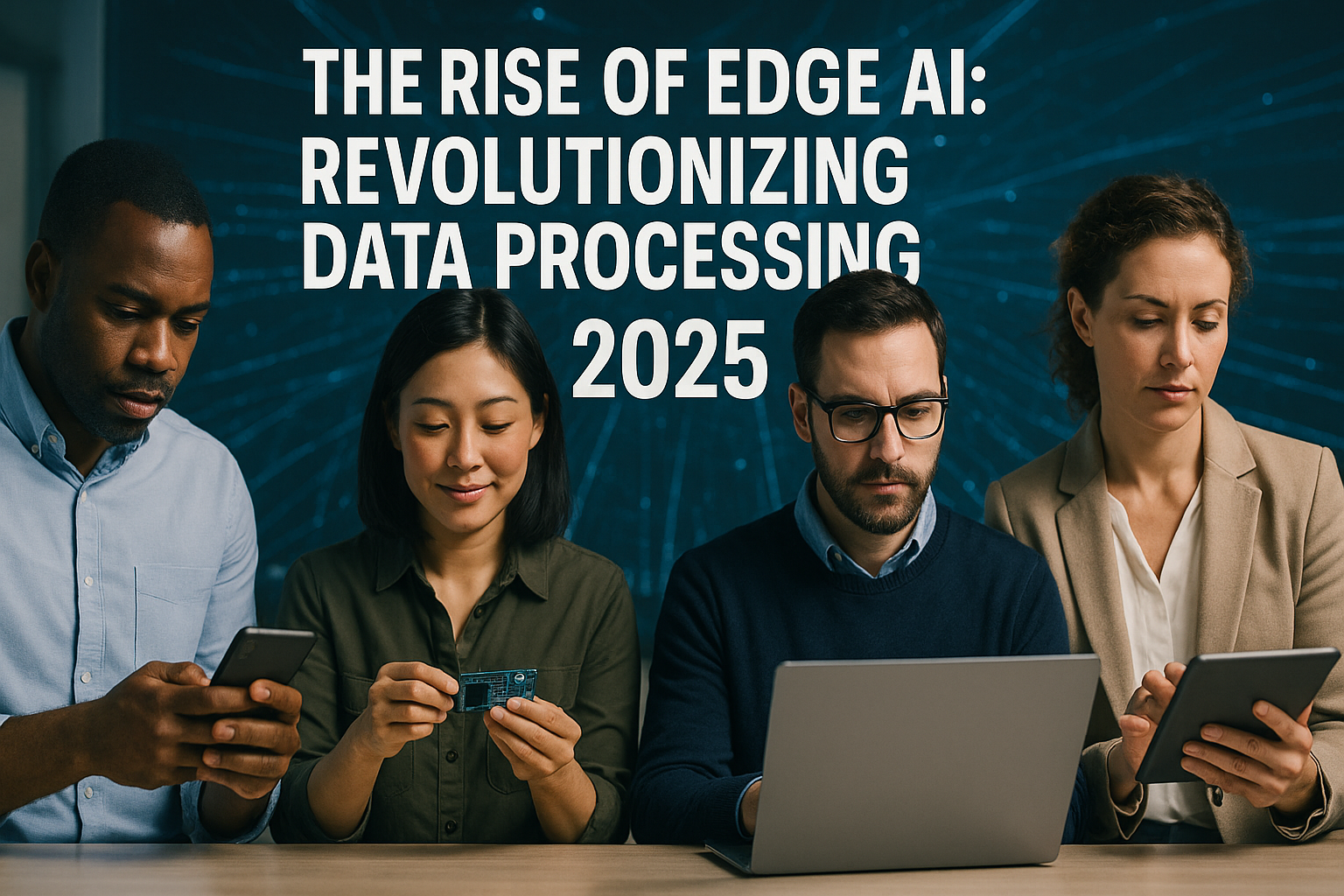
In 2025, Edge AI is changing how we process data. Instead of sending data far away to the cloud, AI can now work directly on devices like phones, high quality cameras, smart speakers and sensors. This means faster decisions, less delay, and better privacy.
As more devices connect to the internet, sending all data to the cloud can be slow and costly. Edge AI solves this by processing data where it is created at the edge of the network. This new approach is helping industries like healthcare, smart cities, and manufacturing work smarter and faster.
In this article, we will explain what AI on the edge is, how it works, and why it is so important for data processing in 2025.
What Is Edge AI?

Edge AI means running artificial intelligence on devices close to where data is collected. Instead of sending data to a central server or cloud, the AI runs locally on devices like smartphones, security cameras, or sensors.
This local processing allows AI to analyze data instantly. For example, a smart camera with AI on the edgecan detect motion or faces without sending the video to a cloud server first. This helps in making quick decisions and saves bandwidth.
The main benefits of AI on the edge are faster response times, less data sent over networks, better security, and the ability to work even if the internet is slow or unavailable.
Rise of Edge AI in 2025

By 2025, Edge AI has become a powerful force in the world of data processing. Unlike traditional cloud computing, AI on the edge processes data directly on devices like smartphones, sensors, or cameras, closer to where the data is created. This shift has been driven by the growing need for faster and more efficient technology that can work without relying on constant internet connections. With more smart devices being used in homes, cities, and industries, AI on the edge is rising quickly to meet the demand for real-time decision-making and reduced data delays.
How Does Edge AI Work?

Edge AI combines two main parts: artificial intelligence algorithms and edge computing hardware. First, AI models are trained using large data sets on powerful cloud servers. Once trained, these models are then optimized to run on small devices, like smartphones or sensors. The device’s hardware, such as specialized processors called AI chips, helps run these models quickly and efficiently.
When the device collects new data, it uses the AI model to analyze it right there. For example, a fitness tracker might count steps or detect heart irregularities without sending data to the cloud. This local processing is faster and saves energy, making devices smarter and more useful.
Benefits of Edge AI in Data Processing
Edge AI brings many benefits for both businesses and everyday users. One major advantage is speed—by processing data locally, devices can react instantly without waiting for information to travel to a cloud server. This is important in critical areas like healthcare monitoring, autonomous vehicles, and security systems. AI on the edge also reduces data traffic on networks, which lowers costs and improves privacy because sensitive information doesn’t need to be sent far away. Additionally, it allows devices to work even when the internet is slow or unavailable, making technology more reliable and flexible.
Role of Edge AI in Modern Technology

Edge AI plays a key role in making modern devices smarter and more responsive. It enables real-time analysis of data from cameras, sensors, and other sources, helping machines make decisions on the spot. This is essential in applications like smart factories, where machines adjust automatically to changing conditions, or in smart homes, where devices learn and adapt to user habits. By moving AI closer to the data source, AI on the edge supports faster innovation and better user experiences across many industries.
How Edge AI Works in Data Processing

Traditional AI often relies on cloud servers to do all the work. Devices collect data and send it to the cloud for analysis. This can cause delays and uses a lot of internet bandwidth.
With Edge AI, devices analyze data right where it is collected. This method uses smaller, efficient AI models designed to work on devices with limited computing power. These AI models handle specific tasks, like recognizing speech, detecting objects, or monitoring health data.
For example, a smartwatch can monitor your heartbeat and alert you immediately if it detects a problem — all thanks to Edge AI running on the device itself.
Why Edge AI Is Changing Data Processing in 2025

- Real-Time Decisions: Edge AI allows devices to make decisions instantly. This is crucial for applications like self-driving cars, which need to react immediately to their environment. It also helps in health monitoring, where fast alerts can save lives.
- Lower Network Use: By processing data locally, Edge AI reduces the amount of data sent over the internet. This saves bandwidth and lowers costs, especially in places with slow or expensive internet.
- Better Privacy: Since data does not need to be sent to the cloud, Edge AI protects sensitive information. This is important for personal devices like phones or home security systems, where privacy is a concern.
- More Reliable Systems: Edge AI devices can work even without a constant internet connection. This means smart devices stay functional during network outages, making systems more reliable.
Key Applications of Edge AI in 2025

- Healthcare: Wearable devices use Edge AI to track vital signs and detect health issues in real time. This technology allows quick responses without needing to send data to a distant server.
- Autonomous Vehicles: Self-driving cars rely on Edge AI to analyze sensor data instantly, helping them make safe driving decisions and avoid accidents.
- Smart Cities: Traffic lights, surveillance cameras, and environmental sensors use Edge AI to monitor and manage urban systems efficiently and quickly.
- Manufacturing: Factories use Edge AI to monitor machines and detect faults early, reducing downtime and saving costs.
Tips for Adopting Edge AI

There are some Tips for Adopting Edge AI:
- Use AI models designed for small devices to ensure fast and efficient processing.
- Protect data with strong security measures both on the device and during transmission.
- Combine edge processing with cloud AI for flexibility and greater power.
- Keep AI models updated regularly to improve performance.
Challenges of Implementing Edge AI
Despite its advantages, Edge AI faces some challenges. Processing power and energy use are limited on small devices, so developers must create efficient AI models that work within these limits. Security is also a concern—protecting data on many distributed devices is harder than on a centralized cloud. Ensuring that Edge AI systems can be updated and maintained over time is another challenge, especially when devices are spread across wide areas. Balancing performance, cost, and security remains a key focus for companies working in this field.
Future of Edge AI Beyond 2025

Looking forward, Edge AI will become even more widespread and powerful. Advances in hardware will allow devices to run more complex AI tasks with less energy. Better security tools will protect data on edge devices, making users feel safer. We will see more integration between Edge AI and cloud computing, allowing smart systems to share work efficiently. By 2025 and beyond, Edge AI will transform industries such as healthcare, transportation, and manufacturing, driving faster decisions, greater efficiency, and smarter technology all around us.
Comparative Table: Edge AI Benefits Across Industries
| Industry | Edge AI Benefit | Example Use Case |
|---|---|---|
| Healthcare | Real-time health monitoring | Wearable alerts for irregular heartbeat |
| Automotive | Instant sensor data analysis | Self-driving cars avoiding obstacles |
| Smart Cities | Fast local data processing | Smart traffic control systems |
| Manufacturing | Machine fault detection | Predictive maintenance on equipment |
Conclusion
In 2025, Edge AI is revolutionizing how data is processed by making AI faster, smarter, and more private. This new approach helps industries like healthcare, transportation, and smart cities improve their services.
By processing data locally, Edge AI reduces delays, saves bandwidth, and offers better security. It also ensures devices work reliably even with poor internet. As Edge AI technology grows, it will continue to shape the future of data and AI.
Call to Action
Want to learn more about how Edge AI can boost your business? Stay ahead of the curve by exploring the latest in AI technology and discover smart solutions powered by Edge AI today! Visit [your website] for expert insights and updates.


