 Written By
  Reviewed By Amelie Fleur
Introduction
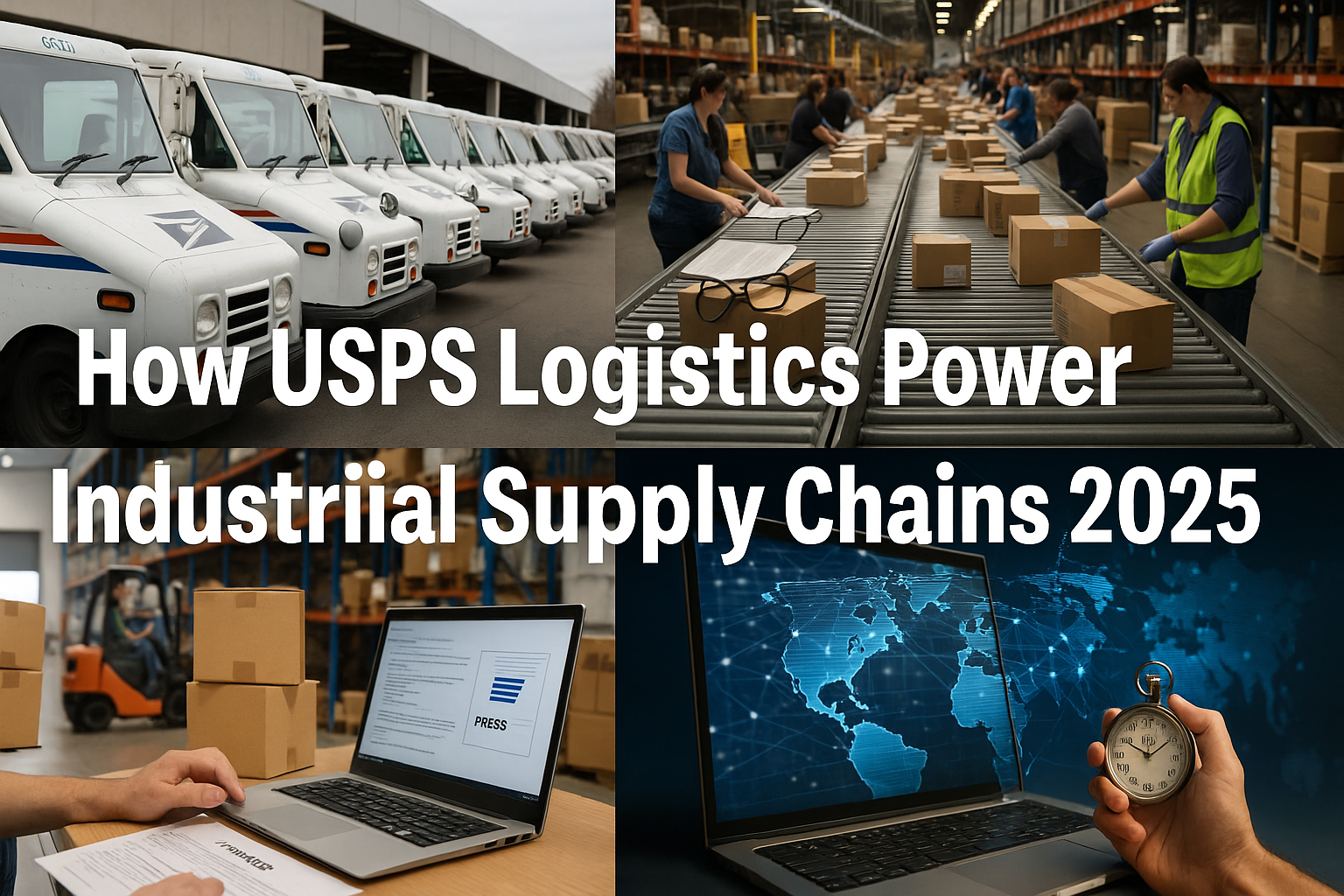
When most people picture the United States Postal Service, they think of birthday cards and door-step parcels. Yet behind the scenes, USPS trucks move far more than consumer mail. Every day, they move machine bearings, electronic sensors, safety labels, and other parts. These items are important for factories to keep running on time.
In 2025, the agency’s improved logistics network helps America’s industrial supply chains. This network uses automation, private partnerships, and real-time data.
This article explains how USPS changed from a letter carrier to a key part of the supply chain. It discusses new tools that help keep freight moving. It also shows how manufacturers can use its nationwide reach for affordable parts delivery.
The Modern USPS Logistics Network

Universal Service as an Industrial Asset
USPS must reach every U.S. address, from Alaskan outposts to Gulf Coast refineries. That legal mandate creates an unmatched daily route map. Manufacturers leverage these “already-going” routes to ship light, high-value industrial items quickly without chartering new trucks.
Sorting & Delivery Centers
Between 2023 and 2025 USPS replaced many small sorting stations with 60 regional Sorting and Delivery Centers (SDCs). SDCs sit near interstates and railyards, letting parts drop from air cargo to local carriers within hours.
Mail Processing Facility (MPF) Upgrades
Legacy MPFs now include separate dock doors for palletized industrial goods. New cross-docking software routes inbound pallets straight to outbound trailers, skipping warehouse storage and trimming dwell time.
Key Services for Industrial Shippers
USPS Critical Mail
Designed for time-sensitive industrial documents—test certificates, design blueprints—Critical Mail guarantees overnight delivery with secure tracking and tamper-evident envelopes.
Technology Driving 2025 Performance
Dynamic Route Optimization
An AI engine re-routes trucks every six minutes based on weather, traffic, and sorting-center congestion. Tests show a 12 percent reduction in late industrial deliveries compared with 2022.
RFID & Computer-Vision Scanning
Each industrial carton gets a passive RFID tag at origin. Cameras and readers log movements through hubs, feeding live ETAs to production managers. Plants can adjust line schedules if a sensor pack runs two hours late, reducing costly downtime.
Robotics & Automated Guided Vehicles
In SDCs, small AGVs move totes of industrial picks—fasteners, gaskets—from inbound belts to outbound cages. Human staff handles only exception items, boosting accuracy and lowering injury risk.
How USPS Supports Just-In-Time Production

- Late Pickup Windows – Many SDCs accept industrial parcels until 11 p.m. for next-day regional arrival.
- Weekend Operations – Saturday network runs stay active, ideal for Monday-morning line starts.
Sustainability Advancements
Electric Delivery Fleet
By mid-2025, 30 percent of USPS last-mile trucks are electric. Industrial shippers gain Scope 3 emission savings they can report to ESG scorecards.
Eco-Sorting Algorithms
Software clusters packages by destination density, raising trailer fill rates to 89 percent—up seven points since 2021.
Reusable Totes Pilot
Some automotive suppliers now use USPS-owned plastic totes with scan-back return systems, slashing cardboard waste.
Case Study: MidWest Components Inc.
Challenge
A Tier-2 auto parts maker needed to ship 900 sensor kits weekly to three assembly plants within 400 miles. LTL rates spiked, and half-full pallets wasted space.
Solution
The company switched to USPS Ground Advantage Industrial Tier with late-night pickup. Kits travel in reusable USPS totes, RFID-tagged for visibility.
Outcome
- On-time delivery rose from 92 percent to 98.5 percent.
- Freight spend fell 18 percent versus previous LTL mix.
- Carbon reporting improved thanks to USPS electric vans on last mile.
Tips for Manufacturers Using USPS in 2025

Map Your Plant ZIP Codes
Identify which SDC serves each plant. Shipments arriving before 4 a.m. at the hub often reach the plant dock by 11 a.m.
Use Bar-Code Bundles
Place one master RFID on each bundle of small cartons. This speeds scans yet retains item-level traceability inside your warehouse.
Leverage Negotiated Service Agreements
If monthly volume tops 5,000 parcels, request a Negotiated Service Agreement (NSA) for tailored rates and dedicated account support.
Integrate APIs
USPS offers real-time tracking and rate APIs. Feed ETA data straight to your Manufacturing Execution System so planners see live updates without switching screens.
Looking Ahead: USPS and Industrial Logistics 2026-2030
- Autonomous Long-Haul Trucks – Pilot lanes between Dallas and Atlanta could cut day-two transit to overnight.
- Blockchain Bills of Lading – Secure ledger tech could automate proof-of-delivery and speed supplier payments.
Conclusion
In 2025 the United States Postal Service delivers far more than household mail. The nation’s oldest delivery agency has quietly become a modern supply-chain ally.
Call to Action
Map your plants to the nearest USPS Sorting and Delivery Centers this week. Small steps now can unlock faster, greener, and cheaper parts flow all year long.