 Written By
  Reviewed By Selene Adley
Introduction
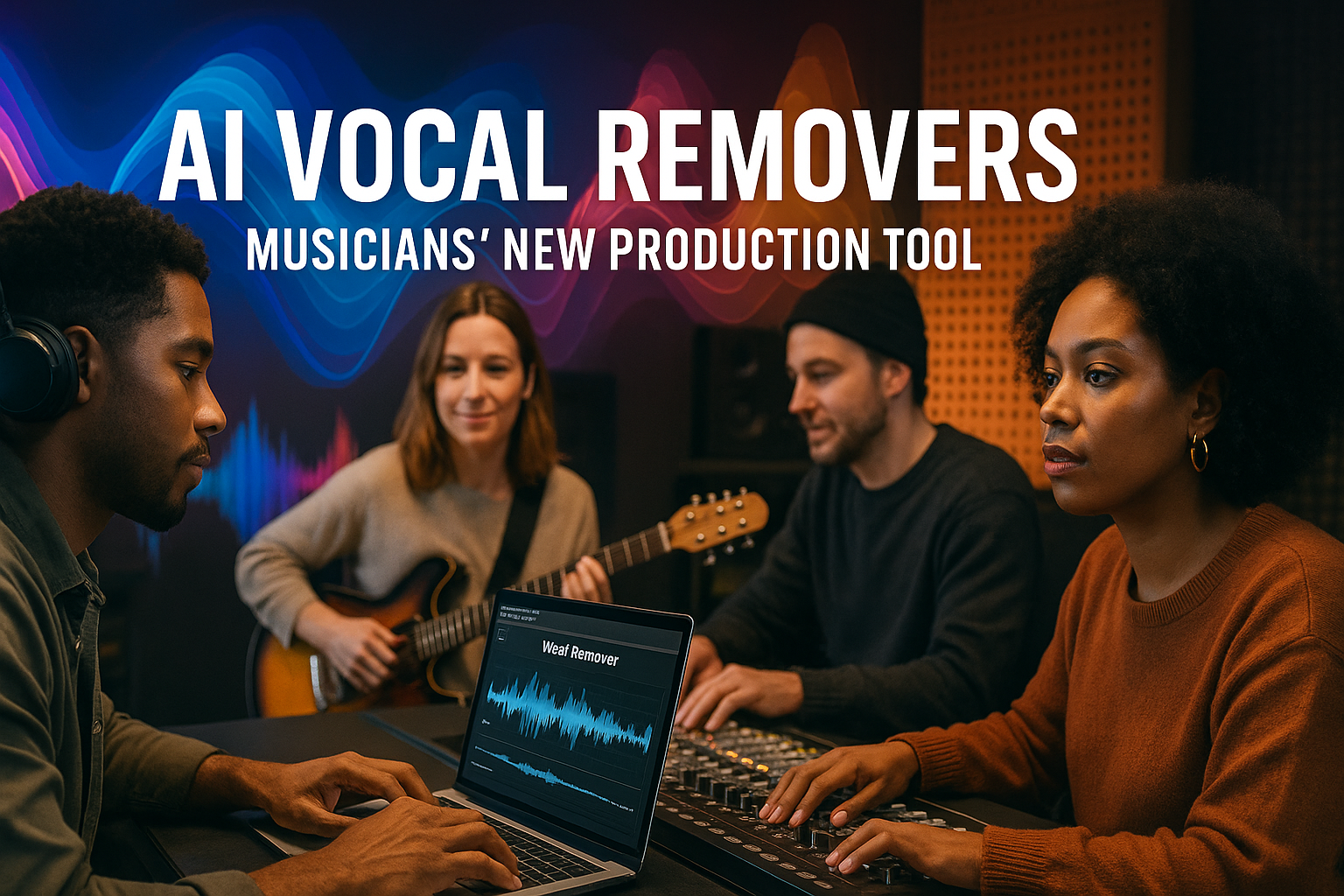
AI vocal removers are changing the music production world. If you’re a musician or producer, you know that working with vocals can be hard. Taking vocals out of a track especially for remixes, covers, or karaoke versions used to take a lot of time and effort.
With the help of AI vocal removers, this process is now faster and easier. These tools use artificial intelligence (AI) to separate vocals from instrumental sounds in songs. This technology helps musicians boost their creativity and streamline their production work.
In this article, we’ll explain what AI vocal removers are, how they work, and why they’re becoming essential for musicians and producers. If you’re new to music production, don’t worry. We’ll guide you step by step on how these tools can make your music-making experience more fun and efficient.
What is an AI Vocal Remover?
An AI vocal remover is a tool that uses artificial intelligence to separate vocals from the rest of the song. In the past, musicians had to manually edit tracks, which was difficult and required high-level technical skills. Today, AI makes this job much easier and faster.
AI vocal removers analyze an audio file and identify which parts of the song are vocals and which are instrumental. They then remove or isolate the vocals, creating a new version of the track. This is particularly useful for musicians who want to remix a song or create karaoke tracks.
How Do AI Vocal Removers Work?
AI vocal removers use sophisticated algorithms to separate vocals and instruments. Here’s a simple breakdown of how these tools work:
- Analyzing the Audio: The tool examines the song’s audio file size, identifying different sounds—vocals, instruments, and background noise.
- Frequency Analysis: The tool separates the vocals based on their frequency range. Since vocals usually occupy a specific part of the sound spectrum, they can be isolated by AI tools.
- Reconstructing the Track: Once the vocals are removed, the AI reconstructs the instrumental part, ensuring the rest of the song remains intact.
- Real-Time Processing: Many tools now process the tracks in real-time, making the process much faster.
While AI vocal removers are generally effective, they may not always achieve perfect results, especially with complex tracks or poorly mixed songs. However, the technology has greatly improved and continues to get better.
Benefits of AI Vocal Removers
AI vocal removers offer clear perks for music makers. You can get a clean instrumental version instantly, saving hours of manual editing. Creators use isolated vocals to craft mashups, remixes, or new vocal effects without needing original stems. Teachers and karaoke apps drop vocals to help students learn melodies. Producers test new arrangements by moving or altering vocals in a few seconds. Overall, these tools unlock creative freedom and cut costs, making professional-sounding edits possible even for beginners.
Role of Vocal Removers in Music Production
In modern production, AI vocal removers sit at the heart of many workflows. Beatmakers grab acapellas to layer over custom instrumentals. Sound engineers check vocal clarity by isolating tracks and cleaning up noise. DJs use vocal-free backing tracks for live mashups and transitions. Songwriters experiment with different arrangements by moving vocal lines into new contexts. Even podcasters employ vocal remover tech to pull guest speech from background tracks for better mix control. This wide use shows how vocal removers have become a core production tool.
Best AI Vocal Removers for Musicians
There are several AI vocal removers available, each offering different editing features and capabilities. Let’s take a look at some of the most popular ones:
1. iZotope RX8
iZotope RX8 is a professional-grade audio editing tool that offers the Music Rebalance feature. This audio editing software allows users to isolate and adjust vocals, bass, percussion, and other elements in a track. This tool is perfect for musicians who need high-quality separation and more control over the audio quality.
2. Spleeter by Deezer
Spleeter is an open-source AI vocal remover developed by Deezer. It’s popular for its fast and efficient separation of vocals and instruments. Spleeter is a free version and easy to use, making it an excellent choice for hobbyists and professionals alike.
3. Vocal Remover Pro
Vocal Remover Pro is a simple tool that lets you isolate vocals quickly. It’s perfect for creating karaoke tracks, practicing vocals, or remixing songs. This software is straightforward to use, making it ideal for beginners.
4. PhonicMind
PhonicMind is an AI-powered tool that allows you to upload your song and instantly remove the vocals. It’s great for remix artists who want to experiment with different versions of a track. PhonicMind also allows you to download the instrumental tracks version for further use.
5. Moises.ai
Moises.ai is a web-based platform that separates vocals and instruments in real-time. This tool is incredibly user-friendly and produces high-quality results. It’s perfect for musicians looking to work with stems, whether for remixes, practice, or karaoke.
Challenges of Using AI Vocal Removers
Despite their power, AI vocal removers face real hurdles. Results can vary: some songs leave behind artifacts or hollow sounds when vocals are removed. Complex mixes, reverb, and overlapping instruments can confuse the algorithms. Free or low-cost tools often limit track length or export quality. Relying solely on AI may miss the fine-tuned adjustments a skilled engineer can make by hand. Legal questions also arise when sampling or remixing protected vocals without permission. To get the best outcome, producers often combine AI outputs with manual edits and check copyright rules carefully.
Future of AI Vocal Remover Technology

Looking ahead, AI machine learning vocal remover tools will become more accurate and user-friendly. New models trained on larger, diverse song libraries will better handle tricky mixes and reverb tails. Cloud-based services may offer near-instant, high-quality stems at low cost. Real-time processing could let performers mute or blend live vocals on stage. Integrated DAW plugins will automate vocal cleanup and separation as you work, without switching apps. As these advances roll out, AI online vocal removers will keep reshaping how musicians create, remix, and experiment with sound.
Comparative Table: Top AI Vocal Removers
| Tool | Features | Pros | Cons |
|---|---|---|---|
| iZotope RX8 | Music Rebalance for vocal and instrumental separation | High-quality separation, professional-grade | Expensive, more complex for beginners |
| Spleeter by Deezer | Open-source, fast vocal/instrument separation | Free, fast, easy to use | Requires technical setup, some artifacts may remain |
| Vocal Remover Pro | Easy-to-use software for vocal isolation | Simple user interface, budget-friendly | Limited features, may leave some artifacts |
| PhonicMind | High-quality vocal separation, remixing tools | Good for remix artists, instant results | Subscription-based pricing |
| Moises.ai | Online tool for vocal and instrumental separation | Real-time processing, user-friendly | Limited free features, internet required |
Conclusion
AI vocal removers are transforming the way musicians and producers work. With the ability to quickly and accurately separate vocals from a song, these Pro Tools offer enhanced creativity, faster mass production times, and higher-quality results. Whether you’re creating remixes, karaoke tracks, or simply experimenting with vocals, AI vocal removers make it easier than ever to work with your music.
As technology continues to improve, AI vocal voice removers will only get better, offering even cleaner results and faster processing times. If you haven’t yet tried these tools, now is the perfect time to explore how AI vocal removers can enhance your music production.
Call to Action
Ready to take your music production to the next level? Try out one of the top AI vocal removers today and start creating your next remix or karaoke track. Visit our website for more information and recommendations on the best tools for vocal isolation.