 Written By
  Reviewed By Freddie Quinn
As a staff writer covering and hobbies for Wirecutter since2022, I bring a wealth of experience in drone testing and flying. I hold a FAA Part 107 license and have tested over dozen drones in various locales, from model-airplane fields in New York City to the national forests of Colorado. My extensive research includes scouring drone forums, reading numerous reviews, and conversing with experienced drone pilots to understand what users look for in the best drones.
In line with Wirecutter’s strict editorial standards, I maintain complete independence and have no financial interests in the industry. This ensures unbiased recommendations based on thorough testing and analysis.
Who This Guide is For
This guide is for anyone—from hobbyists to professionals—interested in capturing high-quality aerial photos and videos. Drones offer a unique perspective that traditional cameras cannot easily achieve. They are valuable tools for tasks ranging from filming weddings and inspecting properties to creating stunning landscape videos.
Professionals in the film industry may look for high-end models that support specific camera mounts, while those in agriculture or industrial inspection may require drones equipped with specialized sensors.
How We Picked and Tested the Best Drones
Selection Criteria
After reviewing professional and owner feedback and consulting several experts, we identified the following criteria for the best drones:
- Quadcopter Design: Drones with a quadcopter or hexacopter design offer the most stable flight and camera performance.
- Crash-Avoidance Sensors: Essential for new flyers, these sensors detect and avoid obstacles, adding safety and ease of use.
- High-Quality Camera: We focused on drones that offer at least 12-megapixel photos and smooth 4K video.
- Three-Axis Gimbal: To ensure stable footage, a three-axis gimbal is critical, keeping the camera steady even in windy conditions.
- Long Battery Life: Drones with batteries lasting at least 30 minutes provide more shooting time and flexibility.
- Autonomous Modes: Features like return-home mode and cinematic flight modes are essential for capturing complex shots effortlessly.
- Portability: The best drones are compact enough to fit into a backpack for easy transportation.
- Long Flight Range: Although rules require keeping drones within line of sight, a longer range can be useful in certain conditions.
- Intuitive Controller: Controllers should have easy-to-use joysticks, buttons, and smartphone integration for viewing live feeds and accessing smart flight modes.
Testing Process
To rigorously test each drone, we shot photos and videos, evaluated stabilization capabilities, and examined whether propellers appeared in the shots. We tested all intelligent flight modes and crash-avoidance systems by flying through challenging environments. Additionally, we assessed the drones’ response to various weather conditions to identify any performance issues.
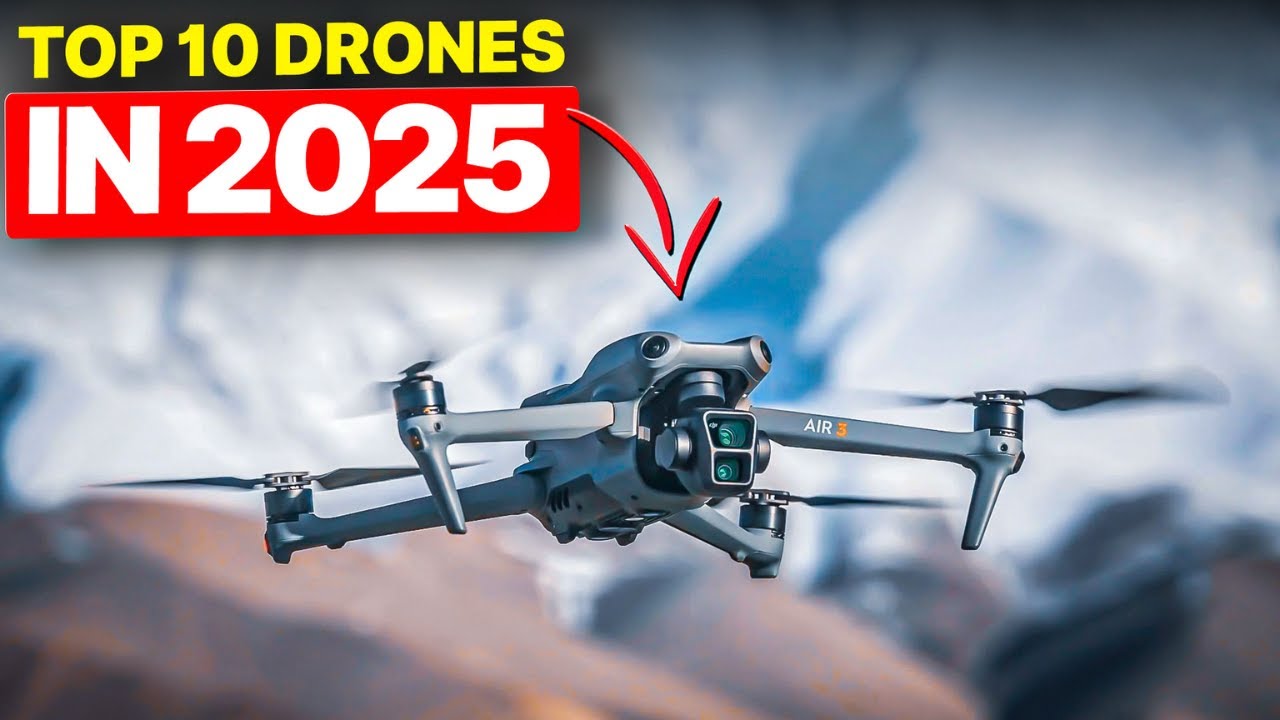
Top Pick: DJI Air 3
Features and Performance
The DJI Air 3 stands out as the best drone for budding aerial photographers and videographers, thanks to its automated obstacle avoidance, two high-quality cameras, and user-friendly interface. Despite being less expensive than the DJI Mavic 3 Pro, the Air 3 offers impressive capabilities.
- Obstacle Avoidance: The Air 3 features 360-degree obstacle detection, making it nearly impossible to crash. This autonomous adjustment feature provides a stress-free flying experience.
- Camera Quality: The main camera boasts a 1/1.3-inch sensor and an f/1.7 aperture, capturing sharp, well-stabilized 4K video at up to 100 frames per second and 20-megapixel stills. The secondary 70mm-equivalent telephoto camera offers additional shooting flexibility.
- Stability in Windy Conditions: The Air 3 remained stable in winds up to 14 mph, delivering steady videos even in challenging conditions.
- Battery Life: With a battery life of up to 46 minutes, the Air 3 allows sufficient time to capture extensive footage before requiring a battery swap.
- Autonomous Flight Modes: The drone includes multiple intelligent flight modes like ActiveTrack and QuickShots, which automate cinematic shots and enhance the creative possibilities.
- Portability: Measuring 8 by 3.5 by 3.25 inches when folded and weighing 1.5 pounds, the DJI Air 3 is compact and lightweight enough for easy transport.
- Controller and Software: The DJI Fly app on the RC 2 controller provides robust functionalities, including drone calibration, camera settings, GPS maps, and intelligent flight modes.
Flaws but Not Dealbreakers
While highly capable, the Air 3 does have a smaller camera sensor than the Mavic 3 Pro and Air 2S. This limits its low-light capabilities slightly but is not a major issue for most users. Additionally, the drone’s 8 GB internal storage can be quickly exhausted at high resolutions, so having extra microSD cards on hand is advisable.
Upgrade Pick: DJI Mavic 3 Pro
Enhanced Features
The DJI Mavic 3 Pro is a premium choice for those willing to invest in superior image quality and advanced features.
- Camera System: It features a large Four Thirds sensor with a Hasselblad-branded wide-angle lens, capable of shooting 5.1K video at 50 frames per second. Two additional telephoto lenses provide further versatility.
- Obstacle Avoidance: Omnidirectional sensors allow it to navigate obstacles seamlessly.
- Battery Life and Range: With a 43-minute battery life, the Mavic 3 Pro supports longer flying and shooting sessions. It can fly up to 17.3 miles away, though keeping it within line of sight is required by law.
- Portability: Weighing just 2 pounds, the Mavic 3 Pro remains easy to carry, although it is slightly larger than the Air 3.
Limitations
The Mavic 3 Pro is significantly more expensive than other models and might be overkill for casual users. However, for professionals seeking the best drone for high-quality photos and videos, it is a worthwhile investment.
Budget Pick: DJI Mini 3
Affordable Entry-Level Option
The DJI Mini 3 is an excellent entry-level drone offering solid performance at a reasonable price.
- Ease of Use: With automatic takeoff, landing, and return-home features, the Mini 3 is user-friendly for beginners.
- Camera Quality: The drone’s 1/1.3-inch sensor captures 48-megapixel photos and 4K video at 30 frames per second. It also supports vertical video, ideal for social media.
- Portability: Weighing less than 250 grams, it doesn’t require FAA registration for personal use and is easily portable.
- Battery Life: The Mini 3 offers up to 38 minutes of flight time with its standard battery, extendable to 51 minutes with the Intelligent Flight Battery Plus.
- Performance: While it lacks obstacle avoidance features, it provides good enough range and quality for casual and beginner use.
Considerations
The Mini 3 doesn’t perform as well in low light or challenging conditions but is an excellent choice for those looking for an affordable, starter drone.
Best for Thrill Seekers: DJI Avata 2
First-Person View (FPV) Experience
The DJI Avata 2 is perfect for those looking for a thrilling FPV flying experience.
- FPV Capabilities: The Avata 2 offers a unique flying experience with its single-axis gimbal and nimble control.
- Build Quality: It is built to withstand impacts, making it durable for intense use.
- Camera Quality: Equipped with a 1/1.3-inch sensor, it captures high-quality footage with a super-wide lens.
- Flight Modes: Includes “easy acro” maneuvers like flips and rolls for added excitement.
Downsides
The Avata 2 lacks the obstacle avoidance sensors found in other models, which could challenge inexperienced pilots. However, its sturdy build compensates for occasional crashes, making it suitable for adventurous flying.
Alternative: Autel Robotics Evo Lite+
Another Solid Option
The Autel Robotics Evo Lite+ is a noteworthy alternative to DJI drones, offering robust features and 6K camera capabilities.
- Camera Quality: It features a 20-megapixel camera with a 1-inch sensor, capable of shooting 6K video.
- Battery Life: With up to 40 minutes of flight time, it is a reliable choice for extended shooting.
- Ease of Use: The Autel Sky app includes various autonomous flight modes that are easy to use and accessible on both iOS and Android.
Drawbacks
While the Evo Lite+ is a strong performer, it doesn’t quite match DJI’s models in image clarity and color quality. Its anti-collision sensors cover fewer directions, requiring pilots to be extra cautious.
Security and Privacy Notes on DJI Drones
DJI drones have faced scrutiny over security concerns, including the need for Android users to download the DJI Fly app from outside the Google Play store. DJI asserts that it does not sell user data but suggests potential data sharing with third parties. Users should weigh the benefits of using features like geofencing and photo access against potential privacy concerns.
Conclusion
When choosing the best drone, consider your specific needs and budget. For aspiring aerial photographers and videographers, the DJI Air 3 offers excellent value with robust features. Professionals seeking top-notch image quality should opt for the DJI Mavic 3 Pro. For beginners, the DJI Mini 3 is an affordable, capable option, while thrill-seekers will enjoy the DJI Avata 2’s FPV experience. Finally, the Autel Robotics Evo Lite+ provides a solid alternative for those looking beyond DJI options.
Whether you’re capturing breathtaking landscapes, inspecting properties, or creating cinematic content, there’s a drone that fits your needs. Invest in one of the best drones to elevate your photography and videography to new heights.