 Written By
  Reviewed By Philip Roger
Introduction
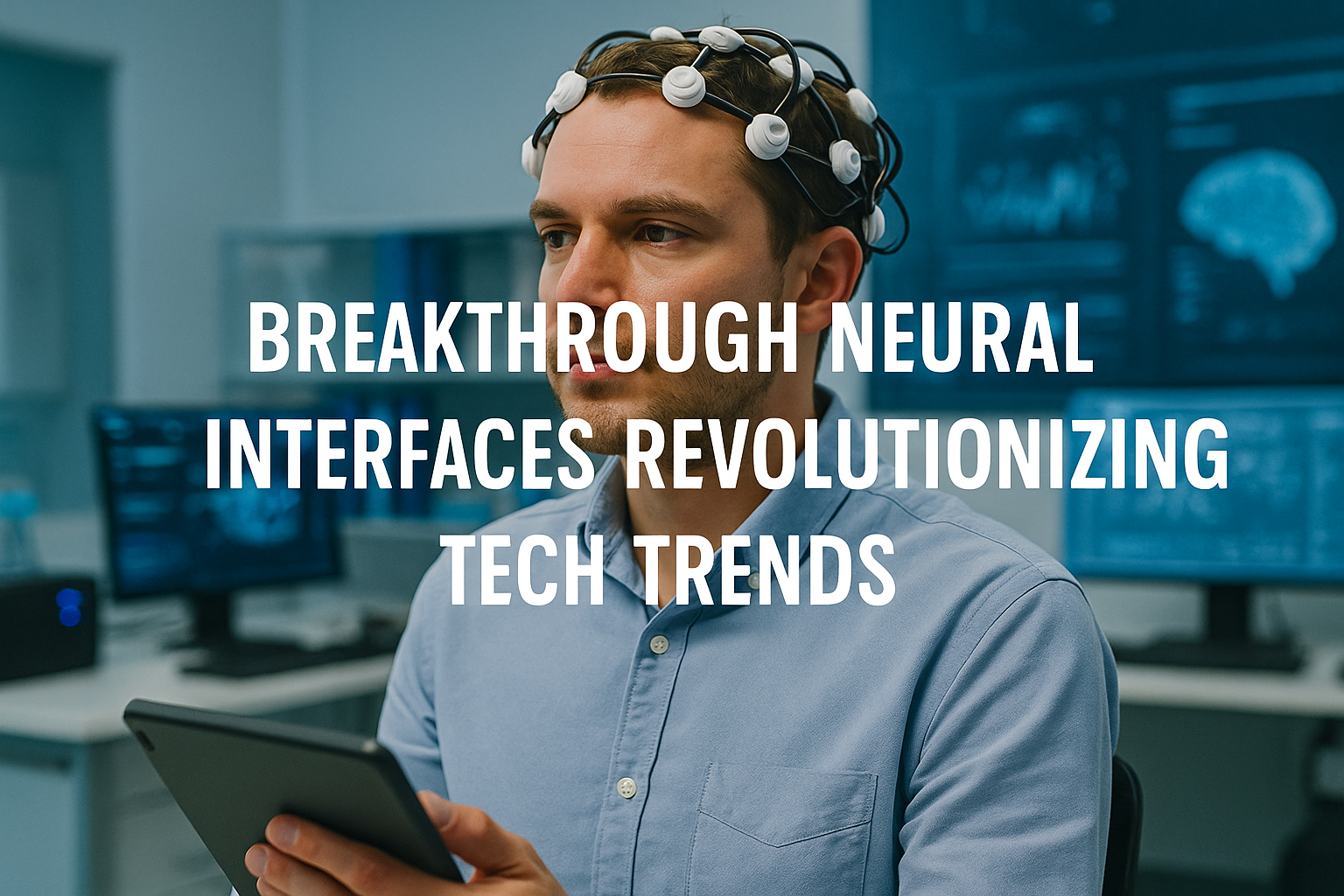
Imagine sending a text simply by thinking of the words, or guiding a drone with a quiet, mental nudge instead of a joystick. Five years ago those ideas lived mostly in sci-fi novels. In 2025, breakthrough neural interfaces—hardware and software that link human nervous systems to digital devices—are racing from labs to consumer shelves. Prices fall, comfort climbs, and real-world use cases expand weekly. Students control prosthetic hands, gamers steer avatars hands-free, and surgeons navigate 3-D scans with eye blinks.
This article unpacks the newest neural interface technologies, explains how they work in plain language, and shows how they disrupt health care, work, and entertainment. You will learn practical benefits, ethical debates, and tips for early adoption, all formatted for easy reading—even for high-school students curious about tomorrow’s tech.
What Exactly Is a Neural Interface?
A neural interface—also called a brain–computer interface (BCI) or neurotech link—is a system that records signals from the nervous system and converts them into digital commands, or sends digital feedback that the brain can understand. Interfaces come in three broad forms:
- Non-invasive wearables (headbands, earbuds, tattoos)
- Minimally invasive implants (microneedle arrays under the skin)
- Fully implanted chips (surgically placed in brain tissue)
Today’s fastest commercial growth sits in the first two categories, giving everyday users safe, affordable entry points.
Breakthrough Categories to Watch

1. Dry-Electrode Headsets
- Innovation: Replace gel-based EEG caps with flexible, gold-coated polymer sensors that press gently onto hair or skin.
- Advantage: Five-second setup instead of twenty-minute messy prep.
- Use Case: VR game studios let players cast spells via alpha-wave spikes linked to intent.
2. Ear-Canal Neurobuds
- Innovation: Tiny sensors line standard wireless earbuds, recording brainstem signals through thin skin.
- Advantage: Doubles as music headphones; near-invisible in public.
- Use Case: Silent speech apps transcribe imagined sentences, enabling on-the-go note taking for journalists.
3. Microneedle Wrist Patches
- Innovation: Arrays far thinner than hair pierce only the outer skin layer above nerves, capturing motor signals.
- Advantage: No surgery, yet more precise than surface electrodes.
- Use Case: Prosthetic limbs respond to natural nerve impulses, restoring piano-level finger control.
4. High-Bandwidth Cortical Implants
- Innovation: 1024-channel flexible “neuro-lace” rests on the motor cortex, streaming data wirelessly.
- Advantage: Thought-to-cursor typing at 120 words per minute—faster than most keyboards.
- Use Case: Paralysis patients regain digital independence, browsing the web or coding software purely by thought.
5. Haptic Feedback Tattoos
- Innovation: Graphene e-skin tattoos vibrate or warm in micro-patterns, feeding sensory info back to users.
- Advantage: Creates closed-loop systems: you think, the device acts, you feel confirmation.
- Use Case: Drone pilots sense direction or altitude without looking away from the sky.
Industry Leaders and Emerging Players
| Company | Flagship Device | Release Status | Notable Feature | Price Range (USD) |
|---|---|---|---|---|
| Neuralink | Link V3 implant | Human trials 2025 | 4 096-channel wireless | TBD (medical route) |
| NextMind-Snap | Dry-EEG headband | Shipping | Magnet-safe clips | 399 |
| EarBrain Labs | NeuroBuds | Beta 2025 | Ear-canal speech decoding | 249 |
| VirtuSkin | Haptic tattoo | Pre-order | Graphene flex mesh | 99 strip |
| Ctrl-Labs (Meta) | EMG wristband 2 | Dev kits | Finger motion capture | 299 |
Small businesses can prototype BCI apps using these off-the-shelf kits.
How Neural Interfaces Work in Plain Words
- Signal Capture – Sensors pick up tiny electrical pulses from neurons or peripheral nerves.
- Pre-processing – Hardware filters noise (eye blinks, muscle twitches).
- Machine-Learning Decoder – Software maps signal patterns to actions: click, scroll, type “A,” move drone left.
- Command Execution – The paired device (phone, wheelchair, AR glasses) performs the action.
- Feedback Loop – Visual, audio, or haptic cues tell the user the command succeeded, refining future signals.
With practice, the brain learns to fire neuron groups more consistently, improving accuracy—just like learning a sport.
Practical Benefits Across Sectors
Health and Rehabilitation
- Stroke survivors use neuro-gaming to retrain brain pathways.
- Real-time mood tracking detects early signs of depression, alerting therapists.
- Smart inhalers trigger when neural patterns hint at asthma onset.
Workplace Efficiency
- Designers scroll CAD models with thought, freeing hands for sketch tablets.
- Surgeons rotate MRI slices using tongue-tap sensors, keeping gloves sterile.
- Remote team members in AR meetings translate gestures into shared whiteboard strokes.
Education and Training
- Language apps adjust difficulty based on learner’s cognitive load signals.
- Sports coaches monitor focus dips through earbud EEG during batting practice.
- Music students see live note-accuracy graphs driven by motor cortex engagement.
Entertainment
- E-sports players gain millisecond advantage, selecting weapons via neural clicks.
- Film directors release “neuro-cut” tracks: audio mixes that adapt to viewer arousal measured by headset.
Ethical and Privacy Questions
| Concern | Risk | Mitigation Tip |
|---|---|---|
| Data security | Brainwave files reveal mood patterns | Use devices with on-device encryption |
| Consent drift | Apps may expand use of data | Check terms quarterly; opt-out toggles |
| Cognitive overload | Too many haptic pings | Customize feedback intensity; enforce rest breaks |
| Access gap | High costs widen disability tech divide | Advocate for insurance and open-source solutions |
Governments begin drafting “neurorights” bills to protect mental privacy.
Getting Started: A Beginner’s Setup

- Pick Your Goal – e.g., hands-free note taking for writers.
- Choose Hardware – A dry-EEG headband offers typing control without surgery.
- Install Software – Apps like Brainflow or openBCI GUI decode signals.
- Train the Model – Spend 15 minutes thinking “left,” “right,” “click” while the app records patterns.
- Integrate – Map commands to hotkeys in your favorite note app.
- Practice Daily – Sessions of 5–10 minutes improve accuracy to >95 % within two weeks.
Cost–Benefit Table for Small Teams
| Use Case | Start Cost | Monthly ROI Potential |
|---|---|---|
| Customer support mood detection | $500 (4 earbuds) | 12 % faster issue resolution |
| Warehouse drone control via EMG | $1 200 (3 wristbands) | 18 % pick-and-pack speed gain |
| Accessible design tester | $400 headband | Wider client base, new contracts |
Usually, ROI outweighs hardware after two or three months of smoother workflows or new revenue channels.
Tips for Maintaining Readability and Comfort

- Clean sensor pads weekly with alcohol wipes.
- Take 30-second eye breaks every 20 minutes to avoid screen fatigue.
- Store headbands flat to preserve electrode springs.
- Use breathable cotton straps in hot climates.
Future Trends: What the Next Five Years Might Bring
- Wireless Power – Charging mats for implants eliminate surgery to swap batteries.
- Edge AI Chips – Decoding runs on-device, boosting privacy and latency.
- Multi-sensory Feedback – Taste or scent cues added to haptic and visual loops.
- Neuro-Marketplace – App stores selling thought-based productivity plugins.
Businesses that explore pilot projects now will ride the curve instead of racing to catch up.
Conclusion
Breakthrough neural interfaces in 2025 move far beyond laboratory curiosities. Dry-electrode headsets, ear-canal neurobuds, microneedle patches, and flexible cortical laces translate thoughts, intentions, and emotions into instant digital actions, while haptic tattoos close the loop with subtle feedback. They boost health recovery, turbo-charge productivity, and invent new entertainment forms—all while raising vital debates about privacy and equality. Start small: clarify your goal, pick affordable hardware, train your brain-signal model, and iterate. Early exploration today prepares you for a future where thinking truly is doing.
Call to Action: Choose a beginner-friendly neural device, run a week-long trial, and share your findings with your team—join the vanguard shaping tech’s next frontier.