 Written By
  Reviewed By Theresa Marie
Introduction
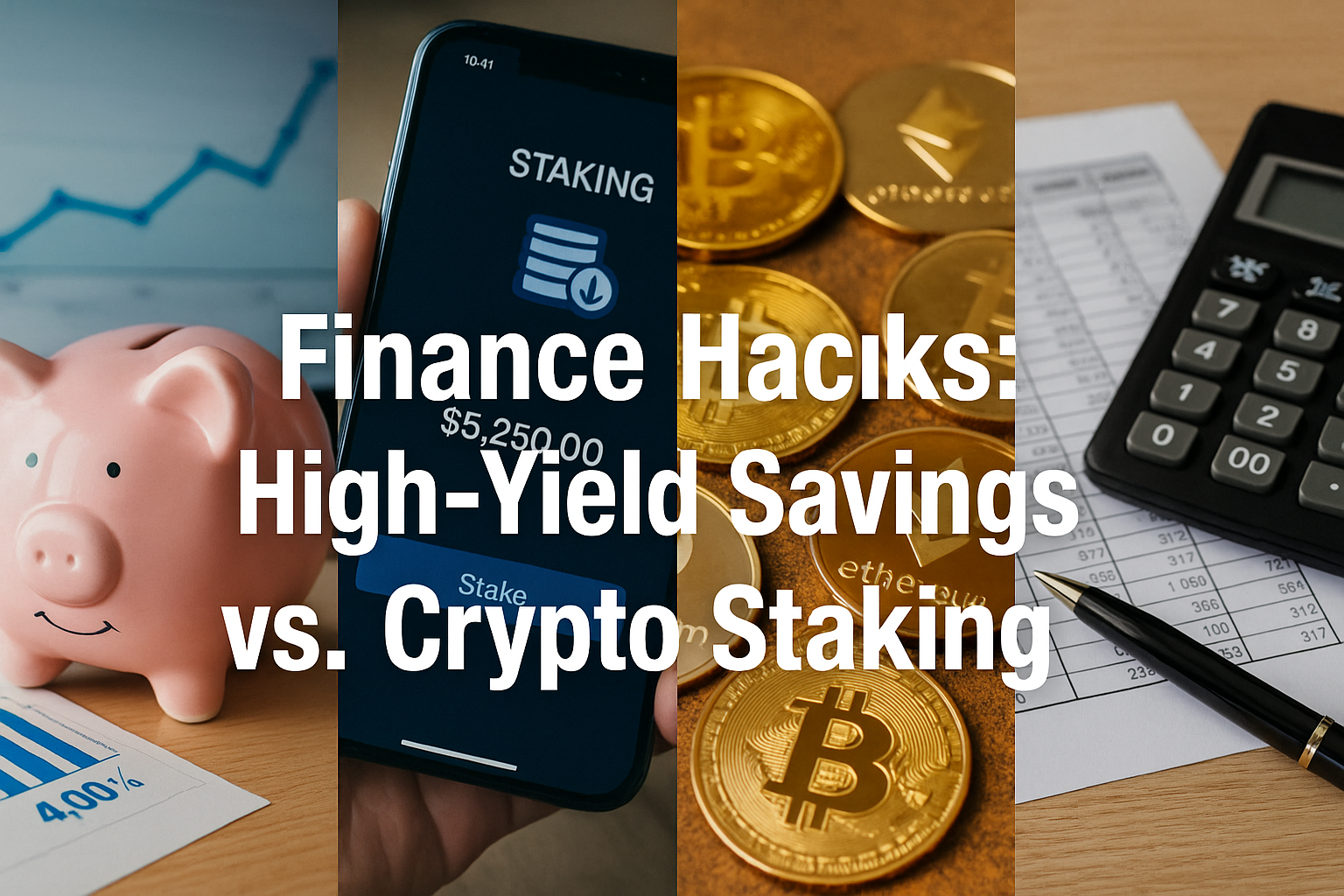
Building passive income strategies is a top goal for many savers and investors. Two popular ways to grow your money are high-yield savings accounts and crypto staking. High-yield savings accounts offer a safe place to park cash while earning above-average savings interest rates. Crypto staking, on the other hand, uses decentralized finance platforms to lock up cryptocurrencies in return for staking rewards. Both methods promise better returns than traditional bank accounts, but they vary in risk, liquidity, and complexity. In this article, we compare these finance hacks side by side, explore advanced tips to maximize earnings, and help you choose the right option based on your goals and comfort with risk.
What is a High-Yield Savings Account?
Definition
A high-yield savings account is a bank or online account that pays a higher annual percentage yield (APY) than a standard savings account. These accounts take advantage of low overhead at online banks or credit unions to pass savings on to customers in the form of above-average savings interest rates.
How It Works
When you deposit money into a high-yield savings account, the bank uses your funds to make loans or invest in low-risk securities. In return, you earn interest on your balance. Interest typically compounds daily or monthly, meaning you earn interest on both your principal and the interest already paid.
Typical Rates and Providers
As of 2025, many online banks offer APYs ranging from 3.5 percent to 5.0 percent, far above the national average for traditional banks, which may hover below one percent. Top providers include digital-first banks and credit unions that advertise competitive rates. Rates can change with market conditions, so savvy savers compare multiple offers and watch for promotional APYs on new deposits.
What is Crypto Staking?
Definition
Crypto staking is the process of holding and locking up a cryptocurrency in a wallet or on a decentralized finance platform to support the network’s operations, such as transaction validation. In exchange, participants earn staking rewards in the form of additional tokens.
How It Works
Proof-of-stake and related consensus mechanisms require validators to lock up coins as collateral. Validators are chosen to create new blocks and verify transactions based on the size of their stake and other factors. If a validator misbehaves, a portion of their stake can be slashed. Honest participation yields staking rewards, often paid out every few days or weeks.
Typical Yields and Platforms
Staking rewards vary by network and platform. Major blockchains like Ethereum, Solana, and Cardano offer rewards from 4 percent to over 10 percent APY. Decentralized finance platforms like Binance Staking, Kraken, and Coinbase allow users to stake without running nodes. Some platforms may lock funds for set periods, while flexible staking lets you withdraw anytime, though usually at a lower rate.
Key Differences Between High-Yield Savings and Crypto Staking

Risk Profiles
High-yield savings accounts are FDIC-insured up to $250,000 per depositor, per bank. This means your money is safe even if the bank fails. Crypto staking carries market risk: token prices can be highly volatile. There is also protocol risk—bugs or hacks on decentralized finance platforms can lead to loss of staked funds.
Liquidity and Access
Savings accounts offer daily liquidity. You can transfer funds to a checking account or withdraw cash without penalty. Crypto staking may lock your coins for days or weeks. Even flexible staking often requires notice before withdrawal and may involve network delays.
Returns and Yield Stability
High-yield savings rates vary with the federal funds rate and can change monthly. They tend to be stable around advertised APYs. Crypto staking yields are tied to network inflation rates, staking participation levels, and token price moves. Nominal APY can shift dramatically based on network activity.
Tax Implications
Interest from high-yield savings accounts is taxed as ordinary income in the year received. Crypto staking rewards are typically taxed as income at the fair market value on the day they are received. Both require careful record keeping and may complicate taxes, but crypto often has more complex reporting requirements.
Regulation and Insurance
Banks offering high-yield savings accounts are regulated by federal authorities and insured. Decentralized finance platforms and tokens operate in a gray regulatory zone. While some centralized crypto exchanges offer custody insurance, this does not replace government-backed protections like FDIC coverage.
Advanced Hacks to Maximize Returns
Laddered Savings Accounts
Instead of putting all your cash in one account, divide it among multiple high-yield accounts with varying promotional rates. By laddering, you can capture higher introductory APYs and migrate funds when rates drop, ensuring you always earn the best available savings interest rates.
Auto-Transfer and Automation
Set up an automatic transfer from your checking to high-yield savings each payday. Many banks let you schedule weekly, bi-weekly, or monthly transfers. Automation enforces discipline, growing your balance over time without active effort.
Diversified Crypto Staking
Spread stakes across several networks to balance risk and reward. For example, stake a portion on a blue-chip network like Ethereum, another on a high-yield but higher-risk network like Polkadot, and keep a reserve in a liquid staking pool for quick access.
Use of DeFi Aggregators
Decentralized finance aggregators like Lido or Rocket Pool combine stakes from many users to increase yield and provide liquidity. They issue liquid staking tokens you can trade or use in other DeFi protocols, maximizing capital efficiency and staking rewards.
Tax-Loss Harvesting and Reinvestment
If your staked tokens decline in value, consider tax-loss harvesting to offset gains from other investments. You can sell at a loss, claim the deduction, and then restake or buy back tokens, keeping your stake while optimizing tax efficiency.
Tools and Platforms for Both Strategies

Top High-Yield Savings Platforms
Digital-only banks like Ally, Marcus by Goldman Sachs, and Discover Bank consistently rank high for APYs and low fees. Credit unions, accessible through apps like Alliant or Connexus, offer competitive rates and community focus.
Leading Crypto Staking Services
Centralized exchanges like Binance and Kraken provide user-friendly staking interfaces. For self-custody, wallets like Ledger Live or Atomic Wallet let you stake directly. DeFi platforms such as Lido and Rocket Pool offer liquid staking tokens for added flexibility.
Comparison and Aggregator Websites
Sites like Bankrate and NerdWallet compare savings rates across dozens of banks. For crypto, DeFi Pulse and StakingRewards track network yields and platform performance. Use these trackers to stay on top of changing rates and offers.
Tips for Beginners

Assess Your Risk Tolerance
Before choosing a strategy, evaluate how much volatility you can handle. If you need guaranteed principal protection, high-yield savings may suit you. If you can weather token price swings for higher returns, crypto staking can boost yield.
Start Small and Scale Up
Test the waters with a small deposit in a high-yield savings account and a modest crypto stake. Monitor earnings and comfort level. Gradually increase amounts as you learn account terms and platform quirks.
Monitor Rate Changes
Set calendar reminders to review savings account APYs and staking yields monthly. Rates shift with market conditions, so periodic checks ensure you maintain optimal returns. When a rate drops, consider moving funds to a higher-earning option.
Keep Funds Balanced
Avoid overconcentration. A balanced approach might allocate 60 percent to high-yield savings for safety, 30 percent to basic crypto staking, and 10 percent to higher-risk DeFi experiments. Rebalance every quarter to stick to your plan.
Relevant Comparison Table
| Feature | High-Yield Savings Accounts | Crypto Staking |
|---|---|---|
| Typical Yield | 3.5% – 5.0% APY | 4% – 10% APY (variable) |
| Risk Level | Very Low (FDIC-insured) | Medium to High (market + protocol) |
| Liquidity | Daily access | Locked 1–30 days or variable |
| Minimum Deposit | $0 – $1 | Depends on network (e.g., 0.01 ETH) |
| Tax Treatment | Ordinary income tax | Income tax on rewards + capital gains |
| Regulation and Insurance | FDIC-insured | No government insurance |
| Recommended Platforms | Ally, Marcus, Discover | Binance, Kraken, Lido, Rocket Pool |
Conclusion
Both high-yield savings accounts and crypto staking offer valuable finance hacks to grow your money faster than a regular savings account. High-yield savings accounts excel in safety, liquidity, and simplicity, making them ideal for risk-averse savers. Crypto staking delivers higher potential yields through staking rewards on decentralized finance platforms but carries greater market and protocol risk. By assessing your risk tolerance, starting small, and using advanced hacks like laddering and yield aggregation, you can harness the strengths of both strategies. A balanced approach with regular reviews ensures you maximize returns while managing risk.
Call-to-Action: Ready to boost your savings and staking returns? Compare top high-yield savings accounts and explore leading staking platforms today to start optimizing your passive income strategy!