
 Written By
  Reviewed By Sienna Lark
Introduction
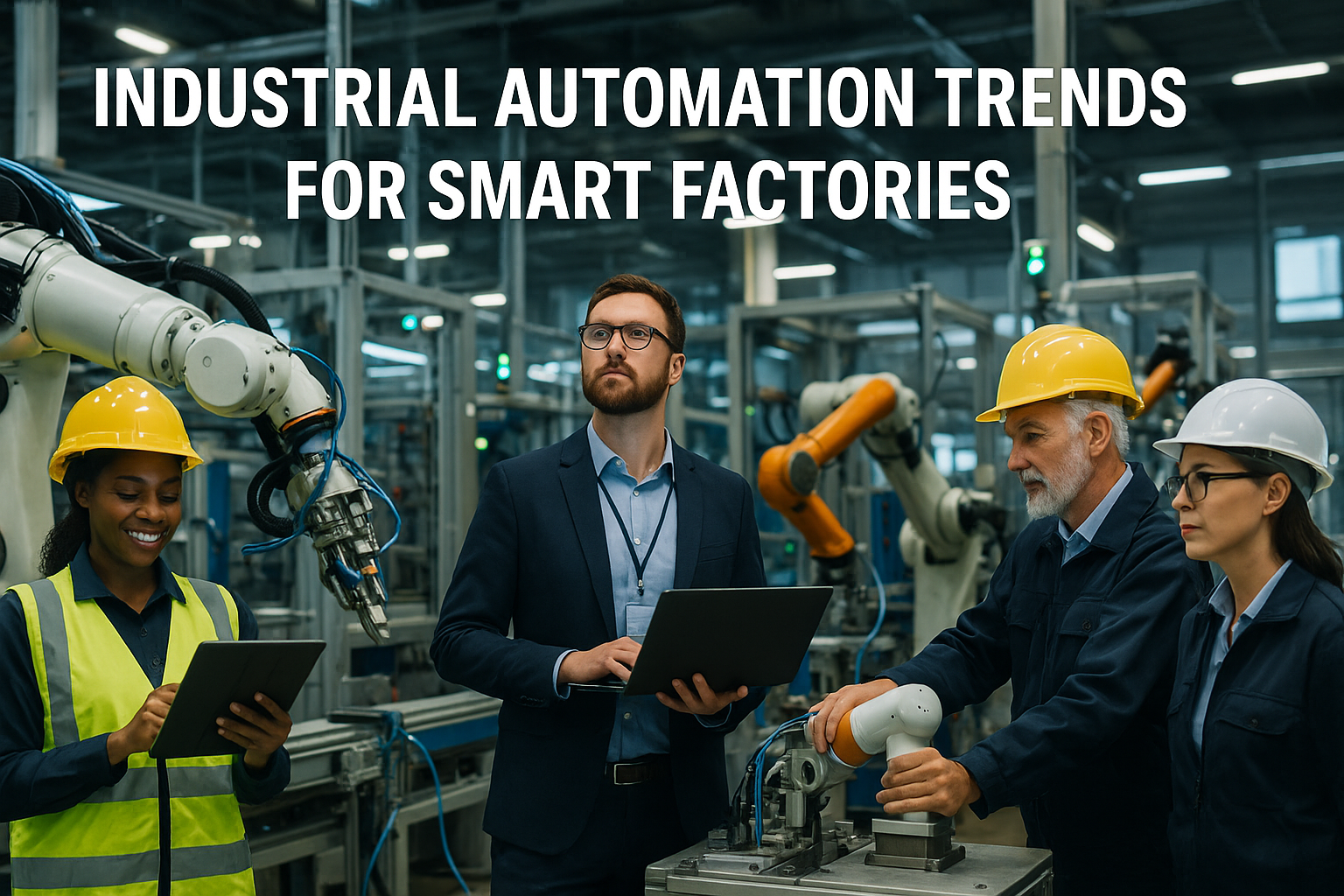
Factories are no longer just rows of machines and workers on assembly lines. Today, many factories are becoming smart factories that use advanced technologies to run more efficiently and with less waste. These changes come from industrial automation trends that transform how we make things. In a smart factory, machines talk to each other, share data, and adjust their work in real time. This leap in technology is part of Industry 4.0, a new era of manufacturing focused on connectivity and data.
In this article, you will learn what makes a factory “smart.” You will see key trends like IoT in manufacturing, robotic process automation, and predictive maintenance. You will also discover how technologies such as digital twin technology, edge computing, and machine learning in industry improve productivity. By the end, you will understand why these industrial automation trends matter and how they shape the factories of tomorrow.
What Are Smart Factories?

A smart factory is a facility where machines, systems, and workers are all connected. Sensors on equipment gather data about temperature, speed, energy consumption use, and more. This data moves to the cloud or to on-site computers using secure networks. Software then analyzes the data to spot problems before they occur. If a machine shows signs of wear, a team can fix it before it breaks. This is known as predictive maintenance. It avoids long downtimes and saves money.
In a smart factory, robots and humans work side by side. Robotic process automation (RPA) helps robots handle repetitive or dangerous tasks. This lets human workers focus on tasks that need creativity and complex judgment. For example, robots may load raw materials, while humans supervise and fine-tune the process.
The term Industry 4.0 comes from the idea that we have had four major shifts in manufacturing operations. The first was the steam engine, the second was electricity, and the third was computers. Now, with smart factories, we see the fourth shift: digital systems working together. In this new model, sensor data is the key to making fast, informed choices.
Key Trends in Industrial Automation
In 2025, several industrial automation trends stand out. These trends help factories become more agile, productive, and safe. Below are the most important trends shaping smart factories today.
1. IoT in Manufacturing
The Internet of Things (IoT) in manufacturing process means using sensors and devices to collect data on machines, workers, and products. Sensors measure temperature, humidity, vibration, and speed. All this information goes to a central system for analysis.
IoT helps teams spot issues before they cause downtime. For instance, if a pump’s vibration gets too high, a technician can check it before it fails. IoT also tracks inventory in real time. This helps factories order materials only when needed, cutting storage costs and waste.
2. Robotic Process Automation
Robotic process automation uses software and physical robots to handle repetitive tasks. Software bots can log into systems, move data, and generate reports without human help. Physical robots handle tasks such as welding, painting, or packaging.
In a smart factory, RPA makes production process faster and more precise. For example, a robot can pick and place parts with high accuracy. This reduces errors and scrap. Meanwhile, workers can focus on tasks that require problem-solving and creativity.
3. Predictive Maintenance
Instead of waiting for a machine to break, predictive maintenance relies on data and analytics to predict when equipment needs service. Sensors on motors and bearings send continuous readings to the cloud. Advanced algorithms analyze those readings to see if a part is wearing out.
Predictive maintenance helps factories avoid costly unplanned downtime. By fixing issues early, they extend the life of machines and lower repair costs. This trend is a win-win: machines run more consistently, and maintenance teams work more efficiently.
4. Digital Twin Technology
A digital twin technology trend means creating a virtual model of a factory or machine. Imagine a digital copy of a production line that mirrors the real one in real time. This twin shows how machines behave, how energy flows, and where bottlenecks appear.
Factory managers can test changes in the digital twin before applying them in the real world. For example, they might simulate a new machine layout to see if it increases throughput. Digital twins help teams make data-driven decisions without risking real equipment.
5. Edge Computing
With edge computing, data is processed close to where it is generated. Instead of sending everything to the cloud, smart sensors and small computer vision on the factory floor analyze data instantly. This reduces delays and neural network congestion.
Edge computing is crucial for time-sensitive tasks. For instance, if a machine overheats, local edge devices can cut power immediately instead of waiting for a cloud command. This quick response enhances safety and efficiency in smart factories.
6. Machine Learning in Industry
Machine learning in industry lets computers learn from data without being explicitly programmed. In manufacturing, machine learning models predict quality issues, optimize production schedules, and detect anomalies in production lines.
For example, a factory may train a machine learning ml model with past quality data. Over time, the model learns to identify patterns that lead to defects. When it spots those patterns in real time, it alerts the team to adjust the process. This reduces scrap and improves product quality.
Tips for Implementing Smart Factory Solutions
If your factory aims to adopt these industrial automation trends, keep these tips in mind:
1. Start Small with Pilot Projects
Begin with a single line or process to test new tech. For example, use a few IoT sensors to monitor temperature in one machine. Evaluate results, refine your approach, and then expand gradually. This minimizes risk and controls costs.
2. Collaborate with Experts
Partner with technology vendors, consultants, or research institutions. They bring expertise in machine learning in industry, IoT deployments, and cybersecurity. Their experience can speed up implementation and avoid common pitfalls.
3. Focus on Workforce Development
Invest in training programs for existing staff. Encourage them to learn about edge computing, robotics, and data analytics. Consider partnerships with local colleges or online courses. Skilled workers make smart factory projects more successful.
4. Ensure Data Quality and Governance
Set up clear processes for how data is collected, stored, and accessed. Use standard formats and naming conventions. Clean data regularly to avoid errors in your analytics and machine learning models.
5. Build a Scalable IT Infrastructure
Design your network and servers to handle growing data volumes. Leverage cloud services where possible for flexibility. Use edge computing devices for real-time processing and lower latency when needed.
6. Maintain Security by Design
Embed security measures from the start. Use secure protocols, strong passwords, and regular software updates. Train employees on safe practices, like recognizing phishing attempts. Conduct regular security audits.
7. Align Technology with Business Goals
Choose industrial automation trends that support your factory’s objectives. If you need faster production, focus on robotic process automation and IoT. If quality is the priority, invest in predictive maintenance and machine learning. Match technology to your core needs.
Comparative Table: Key Automation Trends
| Trend | Description | Key Benefit | Example Use Case |
|---|---|---|---|
| IoT in Manufacturing | Sensors collect real-time data from machines | Better monitoring, fewer errors | Temperature sensors alert on overheating |
| Robotic Process Automation | Robots and software bots handle repetitive tasks | Higher speed, consistent quality | Robotic arms assemble parts |
| Predictive Maintenance | Data analytics predict machine issues before failure | Reduced downtime, lower costs | Vibration data signals bearing wear |
| Digital Twin Technology | Virtual models mirror real machines or processes | Safe testing, quick decision-making | Simulate new line layout for efficiency |
| Edge Computing | Data processed close to its source | Lower latency, faster response | On-site device shuts off machine if fault detected |
| Machine Learning in Industry | Algorithms learn from data to optimize processes | Improved quality, smarter insights | Model predicts product defects |
Conclusion
Industrial automation trends are reshaping manufacturing into smart factories. With IoT in manufacturing, artificial intelligence ai machines now share data in real time. Robotic process automation speeds up repetitive tasks and improves precision. Predictive maintenance cuts reduce downtime by spotting issues early. Digital twin technology helps teams test changes virtually before applying them on the shop floor. Edge computing and machine learning in industry ensure faster decisions and better quality. These trends boost productivity, safety, and sustainability. They also present challenges such as high initial costs, data security, and workforce training. By starting small, partnering with experts, and focusing on data quality, factories can overcome these hurdles. In 2025 and beyond, smart factories will lead the way, offering custom products, resilient supply chains, and greener operations.