 Written By
  Reviewed By Hazel Scarlett
Introduction
In 2025, plant-based seafoods have surged in popularity as people seek healthier and more sustainable seafood alternatives. These innovative products mimic the taste, texture, and nutrition of fish and shellfish without harming oceans or animals. From vegan seafood sushi to fishless fish sticks, chefs and home cooks alike are excited about the future of dining.
This article explores what makes plant-based fish special, why they matter, and how to enjoy them at home. We will cover the benefits, popular brands, and simple 20 minutes recipes. A helpful table compares leading seafood substitutes. Whether you are vegan, environmentally conscious, or simply curious, you’ll learn why ocean-friendly dining is the next big trend.
What Are Plant-Based Seafoods?
Plant-based seafoods are products designed to imitate fish, shrimp, crab, and other seafood using plant ingredients. Instead of fishing or farming marine animals, companies use proteins from peas, soy, algae, and other plants. They blend these with oils, natural flavorings, and seaweed extracts to mimic the taste and feel free of real seafood.
For example, vegan seafood makers often use pea protein for a neutral base. They add seaweed or algae for that ocean-like taste. Some brands use jackfruit or konjac for a firm texture similar to fish fillets. Others incorporate chickpea isolate to achieve a flaky, pink color.
These products aim to match traditional seafood recipes in key ways:
- Flavor: Seaweed, algae, and natural seasonings create salty, ocean tastings.
- Texture: Plant fibers and starches help recreate flaky fish or tender shrimp.
- Nutrition: Many plant-based fish are fortified with omega-3s, vitamin B12, and protein to mirror fish’s health benefits.
By using plants, these foods avoid overfishing, reduce ocean pollution, and lower greenhouse gas emissions compared to conventional seafood.
Popular Types of Plant-Based Seafood
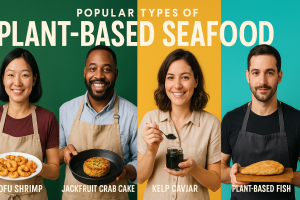
Today’s 2025 food trends include a range of seafood substitutes. Here are some top options:
1. Vegan Salmon and Tuna
Makers use pea protein or soy protein colored with beet juice for a pink hue. Algae oil adds omega-3s. Flakes work in sushi, salads, or sandwiches. Smoked vegan salmon pairs well with bagels and vegan cream cheese.
2. Fish-Free Fillets and Fish Sticks
Textured pea or soy proteins form fillets that crisp when pan-fried or baked. Breaded versions mimic classic fish sticks. Serve with vegan tartar sauce and fries for a familiar meal.
3. Shrimp Alternatives
Shrimp-like shapes come from konjac—a jelly-like root—and bamboo fiber. They snap and curl when cooked in stir-fries or pasta. Seasoned with garlic and vegan butter and chia seeds, they taste like shrimp scampi.
4. Plant-Based Crab Cakes
Crabless cakes use hearts of palm or jackfruit for that flaky texture. Mixed with vegan mayo, Old Bay seasoning, and breadcrumbs, they brown up nicely. Perfect for appetizers or in sliders.
5. Mussels and Clams
Brands grow mycelium (mushroom roots) or use soy-based gels to imitate shellfish. Serve in vegan clam chowder or plant-based seafood pasta. Broth tastes briny thanks to seaweed infusions.
6. Fish Roe Alternatives
Caviar substitutes use seaweed caviar—tiny seaweed spheres that pop like fish eggs. Great for sushi or as a garnish on vegan canapés.
Key Brands Leading the Way
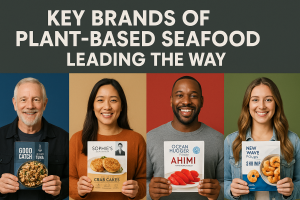
Several companies lead the future of dining with high-quality plant-based seafoods:
1. Good Catch
Good Catch’s tuna and crab cakes use six-legume blends for protein. Their products hold up like real seafood in salads, sandwiches, and pasta. They also fortify with omega-3 algae oil or olive oil.
2. Ocean Hugger Foods
Known for their “vegan salmon,” Ocean Hugger’s tomato-based slices work well in sushi and poké bowls. They use farmed tomatoes mixed with rice and seaweed flavor for that fishy taste.
3. Sophie’s Kitchen
Sophie’s Kitchen offers vegan shrimp, scallops, and crab meat. They use konjac and wild seaweed for texture and flavor. Their shrimp scampi and clam chowder kits make cooking easy.
4. New Wave Foods
New Wave’s vegan shrimp uses algae protein rich for a briny flavor. These plant based shrimp alternatives work in gumbo, stir-fries, and sandwiches.
5. Sophie’s Sweets
This brand creates plant-based smoked salmon and lox using carrots, rice flour, and spices. Perfect on bagels or in salad.
Choosing from these top vegan seafood brands helps you enjoy reliable quality and taste. Always read labels for allergens and nutritional info.
Comparative Table: Popular Plant-Based Seafood Products
| Product Type | Main Ingredients | Best Uses | Estimated Price (per lb) | Top Brand Example |
|---|---|---|---|---|
| Vegan Salmon | Pea protein, algae oil, beet | Sushi, salads, bagels | $15–$20 | Ocean Hugger Foods |
| Fish-Free Fillets | Soy protein, tapioca, seaweed | Fish tacos, sandwiches, fish & chips | $12–$18 | Good Catch |
| Vegan Shrimp | Konjac, bamboo fiber, sunflower oil | Stir-fries, pasta, tacos | $15–$22 | New Wave Foods |
| Plant-Based Crab Cakes | Hearts of palm, vegan mayo, Old Bay | Appetizers, sliders, crab cakes | $14–$19 | Sophie’s Kitchen |
| Vegan Scallops | Soy protein, seaweed extract | Scallop risotto, pasta, pan-seared | $18–$25 | Sophie’s Kitchen |
| Seaweed Caviar | Seaweed balls, salt | Sushi, canapés, garnish | $20–$30 | AquaCultured Foods |
Conclusion
Plant-based seafoods represent a bright future of dining in 2025. With options like vegan salmon, fish-free fillets, and seaweed caviar, white wine diners enjoy familiar high levels flavors without harming oceans. These sustainable seafood alternatives lower environmental impact, protect marine life, and offer health benefits like no mercury. While prices remain slightly higher, growing demand and innovation promise more affordable choices soon. By experimenting with recipes and trying top brands such as Ocean Hugger Foods and Good Catch, you can enjoy delicious ocean-friendly dining. Embracing plant-based fish helps protect our planet and supports healthier eating.