

 Written By
 Humanity looks up at the night sky with constant wonder. Engineers and astronomers build advanced tools to unlock cosmic secrets. These projects change how we understand our place in the universe. Therefore, following recent space exploration updates helps everyone stay informed about universal progress.
Modern rocket systems and deep-space telescopes generate massive amounts of data daily. Scientists analyze this information to solve ancient celestial puzzles. Consequently, our species moves forward into a new era of cosmic discovery. Brilliant minds question established theories and test bold hypotheses.
Every successful launch adds another building block to collective human knowledge. Technology touches every corner of society, transforming abstract stargazing ideas into practical tools. Ultimately, this relentless pursuit of universal truth shapes a brighter and more connected tomorrow.
Human Missions to the Moon
Astronauts prepare for historic journeys beyond low Earth orbit. Government agencies and international partners test advanced life-support systems. Crewed missions return to the lunar neighborhood to establish a permanent human presence. Therefore, specialists train vigorously for deep-space survival.
Engineers build specialized habitats designed to withstand harsh lunar environments. Furthermore, rovers map surface resources at the lunar poles. These vehicles search for trapped water ice inside dark craters. Water extraction remains vital for future Mars missions. Consequently, lunar outposts serve as steppingstones for deeper interplanetary travel.
Next-Generation Deep Space Telescopes
Astronomers launch powerful new observatories into deep space. These advanced instruments capture light from the earliest galaxies in existence. Researchers study ancient starlight to learn about cosmic origins. Furthermore, high-resolution cameras survey wide patches of the night sky with stunning clarity by space exploration.
Scientists analyze dark energy and dark matter using these vast datasets. Therefore, theoretical models of the universe update continuously. Ground-based facilities also coordinate with orbiting telescopes. This global teamwork allows researchers to track fast-moving celestial events in real time. Every successful alignment of mirrors reveals hidden cosmic structures.
Reusable Rockets and Commercial Launch Tech
Private aerospace companies revolutionize how payloads reach orbit. Engineers design fully reusable rocket boosters to slash launch costs. Successful vertical landings prove that hardware recovery works reliably. Therefore, commercial flight operations accelerate across the private sector.
Companies deploy massive satellite constellations to improve global internet connectivity. Furthermore, cargo delivery ships supply orbital stations with essential goods regularly. Lower transportation costs invite new participants into the aerospace market. As a result, commercial space tourism turns from pure fiction into reality.
Planetary Science and Asteroid Research
Uncrewed probes travel across the solar system to visit distant worlds. Planetary scientists study rocky asteroids to understand early solar system formation. Sample-return missions collect pristine dust from ancient space rocks. Laboratories analyze these samples to track organic chemical compounds safely.
Furthermore, defense researchers test asteroid deflection strategies. Space agencies track near-Earth objects to protect our planet from potential impacts. Therefore, planetary defense programs grow stronger every single year. Robotic explorers expand our geographical boundaries without risking human lives.
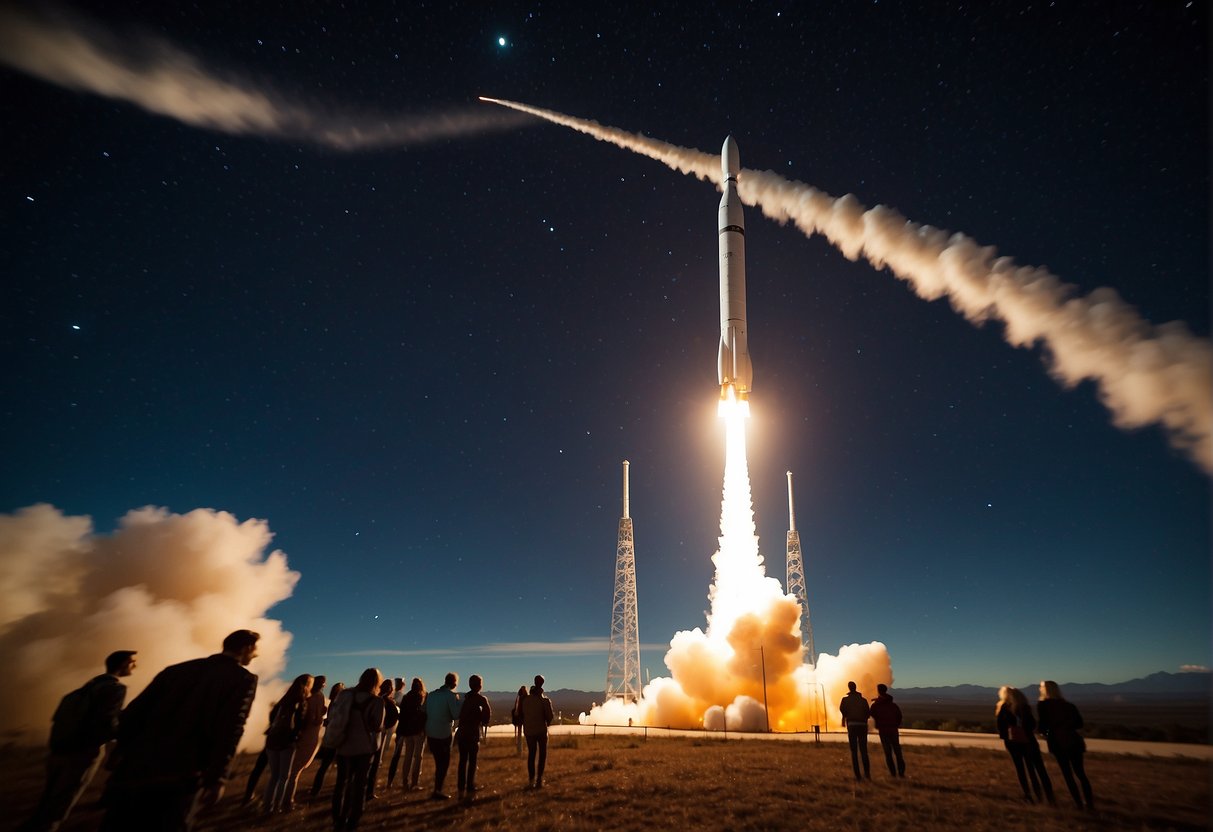
Human Missions to the Moon
Astronauts prepare for historic journeys beyond low Earth orbit. Government agencies and international partners test advanced life-support systems. Crewed missions return to the lunar neighborhood to establish a permanent human presence. Therefore, specialists train vigorously for deep-space survival.
Engineers build specialized habitats designed to withstand harsh lunar environments. Furthermore, rovers map surface resources at the lunar poles. These vehicles search for trapped water ice inside dark craters. Water extraction remains vital for future Mars missions. Consequently, lunar outposts serve as steppingstones for deeper interplanetary travel.
Reusable Rockets and Commercial Launch Tech
Private aerospace companies revolutionize how payloads reach orbit. Engineers design fully reusable rocket boosters to slash launch costs. Successful vertical landings prove that hardware recovery works reliably. Therefore, commercial flight operations accelerate across the private sector.
Companies deploy massive satellite constellations to improve global internet connectivity. Furthermore, cargo delivery ships supply orbital stations with essential goods regularly. Lower transportation costs invite new participants into the aerospace market. As a result, commercial space tourism turns from pure fiction into reality.
Planetary Science and Asteroid Research
Uncrewed probes travel across the solar system to visit distant worlds. Planetary scientists study rocky asteroids to understand early solar system formation. Sample-return missions collect pristine dust from ancient space rocks. Laboratories analyze these samples to track organic chemical compounds safely by space exploration.
Furthermore, defense researchers test asteroid deflection strategies. Space agencies track near-Earth objects to protect our planet from potential impacts. Therefore, planetary defense programs grow stronger every single year. Robotic explorers expand our geographical boundaries without risking human lives.
Searching for Extraterrestrial Habitability
Astrobiologists search for signs of life beyond Earth. Icy moons in the outer solar system hold massive subsurface oceans. Space probes measure plumes of water vapor erupting from these distant crusts. Therefore, laboratories test liquid samples for microbial signatures.
Furthermore, exoplanet hunters scan nearby star systems for rocky worlds. Specialized instruments analyze planetary atmospheres for oxygen and methane. Finding these gases could indicate active biological processes. Consequently, humanity inches closer to answering the ultimate question of whether we are alone.
The Role of Artificial Intelligence in Astronomy
Computers process astronomical data faster than human researchers ever could. Machine learning algorithms sort through millions of digital images automatically. Artificial intelligence spots unusual cosmic transients and variable stars instantly.
Therefore, astronomers focus their time on deep data interpretation. Furthermore, software systems guide autonomous spacecraft during deep-space navigation maneuvers. Machine learning reduces dependency on ground-control stations. Technology streamlines mission operations significantly across every active program.
International Collaboration and Global Alliances
Interplanetary missions require massive financial and technical resources. Nations share technology and scientific data across international borders. Global laboratories collaborate on spacecraft design and tracking networks.
Therefore, complex missions succeed through shared expertise. Open-access archives allow worldwide researchers to study telemetry feeds instantly. No single country achieves these monumental milestones alone. Collective intelligence drives modern space programs forward successfully.
Looking Ahead to Tomorrow
The future holds endless cosmic possibilities. Upcoming exploration milestones will test human ingenuity. Future crews might walk on the red planet within our lifetimes. Advanced propulsion concepts promise shorter travel times across the solar system.
Education systems must inspire the next generation of aerospace engineers. Young students hold the key to tomorrow’s stellar innovations. Curiosity remains our greatest tool for exploring the dark void.
Final Thoughts
The rapid evolution of space exploration shapes every aspect of our modern perspective. From crewed lunar orbits to deep-space observatories, human ingenuity solves complex universal challenges daily. However, progress requires strict dedication and careful safety oversight. Collaboration remains the cornerstone of all future cosmic achievements.
When global experts share knowledge openly, humanity thrives together. Looking toward the horizon, these cooperative global efforts will continue unlocking unprecedented mysteries of the universe, inspiring generations of thinkers, builders, and dreamers to push the boundaries of what is possible.


