
 Written By
  Reviewed By Oscar James
Introduction
Wearable health tech has come a long way. In 2025, these devices go beyond counting steps. They now track critical vital signs in real time. People can watch their heart rate, blood oxygen, blood pressure, and more right on their wrist or patches. This tech helps both doctors and users catch issues early, improve fitness, and manage chronic conditions. Small and large companies alike develop new sensors that are small, accurate, and easy to wear. In this article, we cover the top wearable health tech advancements to monitor vital signs. You will learn what wearable health tech is, why it matters, the leading innovations, real-world use cases, tips for choosing devices, and future trends. By the end, you can pick the right device and understand how it can help you stay healthy.
What is wearable health tech?
Wearable health tech means devices you wear that track your body’s signals. These gadgets use sensors to read data like heart beats, oxygen levels, and temperature. They connect with apps on your phone or computer. Data appears in easy charts and alerts. A smartwatch might buzz if your heart rate is high. A patch on your skin can warn if you get dehydrated. These devices collect data all day, not just in the doctor’s office. That gives a fuller view of your health. Wearable health tech includes smartwatches, fitness bands, patches, rings, and even smart clothing. Each form has pros and cons, but all aim to keep you informed and safe.
Core Components
Most devices share three parts: sensors, a processor, and a wireless link. Sensors detect changes in your body, like pulse or sweat. The processor turns raw signals into data. It also runs small programs to filter noise. Wireless links use Bluetooth or Wi-Fi to send data to your phone. From there, apps show results in graphs and reports. Some services alert your doctor if metrics cross dangerous levels. The key is that these gadgets work continuously, giving you a clear picture of your body’s health.
Why monitor vital signs?
Vital signs are the basic measures of how your body is doing. They include heart rate, blood pressure, body temperature, and blood oxygen. Tracking these can reveal early signs of illness or stress. If your heart rate stays high at rest, it could point to heart disease. Low blood oxygen can signal lung issues. A sudden spike in blood pressure might warn of stroke risk. By catching changes early, you can seek help before problems worsen.
Benefits for Daily Life
For healthy people, wearables help optimize fitness. You see how your heart responds to workouts and adjust effort. You learn which activities boost your sleep quality. For those with chronic conditions, wearables offer peace of mind. Diabetics track glucose on the go. People with high blood pressure get alerts before dangerous spikes. All users gain insight into how food, stress, and exercise affect their bodies.
Top Wearable Health Tech Advancements
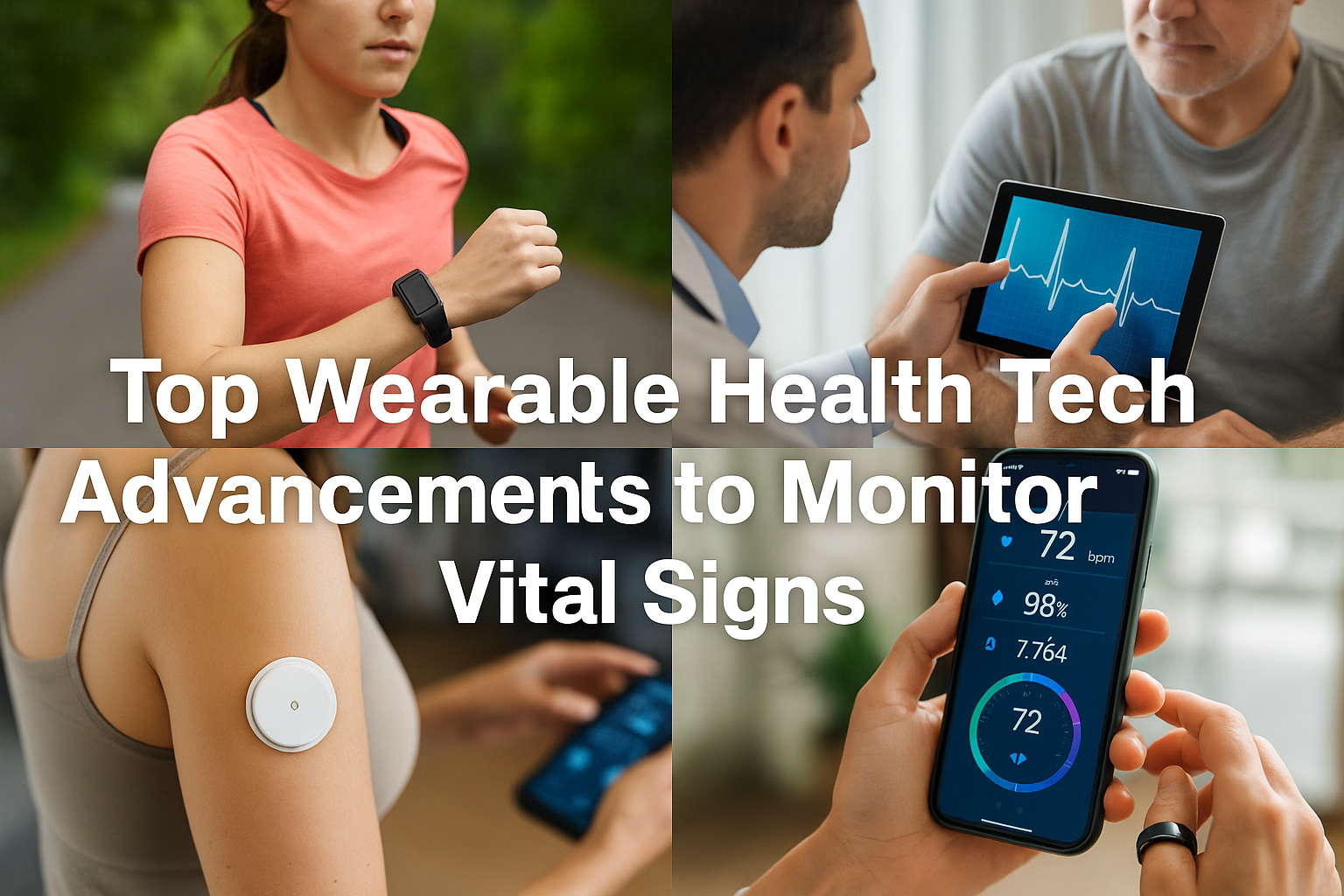
In 2025, new devices push boundaries. Here are the five leading innovations that can monitor vital signs better than ever.
Continuous Heart Rate and Heart Rhythm Tracking
Heart rate monitors began with chest straps. Now, wrist-based sensors use green and infrared lights to read blood flow. Advanced algorithms spot irregular rhythms like atrial fibrillation. New smart rings and patches provide clinical-grade accuracy. They can run ECG tests when they detect odd beats. This tech helps catch heart issues early without needing a hospital visit.
Continuous Blood Pressure Estimation
Traditional blood pressure cuffs are bulky. New wearables estimate pressure using pulse wave analysis. Sensors on the wrist or arm measure how fast blood travels between two points. AI models then calculate systolic and diastolic numbers. While still in early stages, these devices let users measure pressure any time—during stress or rest.
Continuous Glucose Monitoring (CGM)
Diabetics benefit from small sensors placed under the skin. They read glucose in tissue fluid every few minutes and send alerts if levels drop or rise too fast. In 2025, CGM sensors last longer and require no finger pricks. They pair with smartwatches to show real-time charts and warnings, making diabetes easier to manage.
Skin Temperature and Stress Monitoring
Skin sensors track temperature trends, flagging fevers or infections early. Paired with heart rate variability, wearables gauge stress levels. Lower variability means higher stress. Apps guide users through breathing exercises when stress spikes, helping manage anxiety on the spot.
Table: Key Wearable Health Tech Advancements
| Advancement | Vital Sign | Device Type | Key Benefit |
|---|---|---|---|
| Heart Rate & Rhythm Tracking | Heart rate, ECG | Watches, rings | Early arrhythmia detection |
| Blood Oxygen & Respiration Monitoring | SpO₂, respiration | Watches, pods | Sleep apnea and lung health |
| Continuous Blood Pressure Estimation | Blood pressure | Wristbands, cuffs | Anytime, non-stop pressure data |
| Continuous Glucose Monitoring | Glucose levels | Skin patches | Finger-free diabetes management |
| Hydration & Sweat Analysis | Hydration, salts | Patches, straps | Dehydration alerts |
| Skin Temperature & Stress Monitoring | Temp, HRV | Watches, patches | Fever and stress management |
Real-World Use Cases

These advancements prove their worth in many areas.
Fitness and Sports
Athletes use heart rate zones and hydration data to train smarter. They track recovery with HRV and temperature. Teams prevent injuries by monitoring stress markers and workload.
Workplace Safety
Workers in factories or outdoors wear patches that alert supervisors to heat stress. Real-time data reduces accidents. Companies track health trends to improve shifts and breaks.
Telehealth and Remote Care
Doctors can monitor patients with chronic conditions between visits. CGM and blood pressure readings upload to cloud portals. Physicians adjust treatments quickly, avoiding hospital stays.
Elderly Care
Seniors wear simple devices that alert family or caregivers if vital signs go out of safe ranges. Falls and health declines rise faster in older adults. Continuous monitoring catches problems early.
Personalized Wellness
General users track how foods, sleep, and workouts affect vitals. They use insights to choose better habits. Wearables nudge them to move when sedentary and relax when stressed.
Tips for Choosing Wearable Health Tech
Pick a device that matches your needs and lifestyle.
Look for clinical accuracy—check FDA clearances or studies.
Consider battery life and comfort for continuous wear.
Check app features: charts, alerts, and data sharing.
Review data privacy policies—ensure your health data stays secure.
Future Trends in Wearable Health Tech
Wearables keep evolving beyond 2025. Expect these trends next:
Integration with AI Health Coaches
Smart apps will analyze your data and offer personalized plans. They will suggest workouts, meals, and rest schedules based on vital trends.
Multi-Parameter Smart Clothing
Sensors woven into fabrics will measure many signs, from ECG to sweat, without separate gadgets. Clothing will become the wearable.
Battery-Free Sensors
New energy-harvesting tech will power sensors through body heat or motion. No need for chargers.
Edge Computing for Privacy
Data processing will shift to the device itself, reducing cloud uploads and improving privacy.
Biometric Security and Payments
As security improves, wearables may replace cards for ID and payments, using heart patterns or other vitals.
Conclusion
Wearable health tech in 2025 brings clinical monitoring to everyday users. Continuous heart rate, oxygen, pressure, glucose, and hydration tracking offer life-saving insights. Athletes, seniors, patients, and wellness seekers all benefit. As the tech grows, devices will become more accurate, comfortable, and private. By choosing the right wearable, you can watch your vital signs, catch issues early, and live healthier. Start exploring devices that fit your goals and enjoy the peace of mind that comes from knowing your body better.
Call-to-Action
Ready to take charge of your health? Explore the latest wearable devices and start monitoring your vital signs today for a healthier tomorrow!