 Written By
  Reviewed By Romy Scout
Introduction
As the world shifts toward sustainable transportation, electric trucks are taking center stage. With advancements in commercial vehicles, electric vehicle (EV) technology, and the growing demand for eco-friendly solutions, the US electric truck charging network is rapidly expanding. This expansion is crucial for the adoption of electric trucks and ensuring that these vehicles can operate efficiently across the country.
In 2025, the US is set to see significant growth in its short term or long term electric truck charging infrastructure. This article will explore the current state of the charging network, key developments in 2025, and how the expansion will help shape the future of electric trucks in the United States. We’ll also provide a map to highlight the key regions where the charging network is set to grow.
What Is the US Electric Truck Charging Network?
The US electric truck charging network refers to a system of charging stations designed specifically for electric trucks. These stations are part of the larger electric vehicle charging network that supports various types of fully electric vehicles, from passenger electric cars to heavy duty vehicles trucks.
Electric trucks are designed to reduce emissions and offer a cleaner alternative to traditional diesel trucks. However, one of the challenges faced by these vehicles is the availability of charging stations, especially in rural or remote areas. The charging network expansion aims to address this challenge by adding more fast-charging stations along major highways and truck routes.
In 2025, the focus will be on building a robust EV charging infrastructure that can support the increased use of electric trucks and ensure that these vehicles are as efficient and practical as their diesel counterparts.
Key Developments in the US Electric Truck Charging Network in 2025
1. Expansion of Fast-Charging Stations
The most significant development in the US electric truck charging network for 2025 is the expansion of fast-charging stations. Fast chargers are essential for long-haul electric trucks, as they can charge the vehicle in a fraction of the time it takes using standard chargers.
By 2025, many of the fast-charging stations will be strategically placed along major highways, particularly those commonly used by freight trucks. This expansion will reduce range anxiety for truck drivers and increase the convenience of using electric trucks for long-distance travel.
Why this matters: Faster charging means less downtime for trucks, making them more competitive with traditional diesel trucks.
2. Government Investments and Incentives
The US government has recognized the importance of a sustainable transportation system. As a result, it is expected to continue supporting the expansion of the electric truck charging network through various incentives. These incentives will help private companies, utilities, and local governments to build more charging stations, especially in underserved areas.
The Biden administration has already announced plans to invest billions of dollars in electric vehicle infrastructure, and a portion of this funding will go toward expanding the charging network for electric trucks.
Why this matters: Government funding will help create a nationwide charging network, making electric trucks a viable option for businesses and logistics companies.
3. Private Sector Participation
In addition to government investments, the private sector is playing a significant role in the expansion of the electric truck charging network. Many major companies in the transportation and energy sectors are collaborating to build charging stations specifically designed for electric trucks.
Partnerships between energy companies like Tesla, ChargePoint, and EVgo are expected to accelerate the rollout of high-speed charging stations. These companies will also focus on ensuring that charging stations are located at key freight corridors where electric trucks are most likely to travel.
Why this matters: Private sector involvement means that the charging network will grow faster, with more resources dedicated to meeting the needs of electric trucks.
4. Sustainability and Green Energy Integration
As the electric truck charging network expands, sustainability will be a key focus. Many charging stations will be powered by renewable energy sources like solar panels and wind. This will reduce the overall carbon footprint of electric trucks and ensure that their operation is as environmentally friendly as possible.
Additionally, electric trucks themselves are being designed to be more energy-efficient, further contributing to the reduction of greenhouse gas emissions.
Why this matters: The integration of green energy into the charging network ensures that electric trucks remain an eco-friendly choice for transportation.
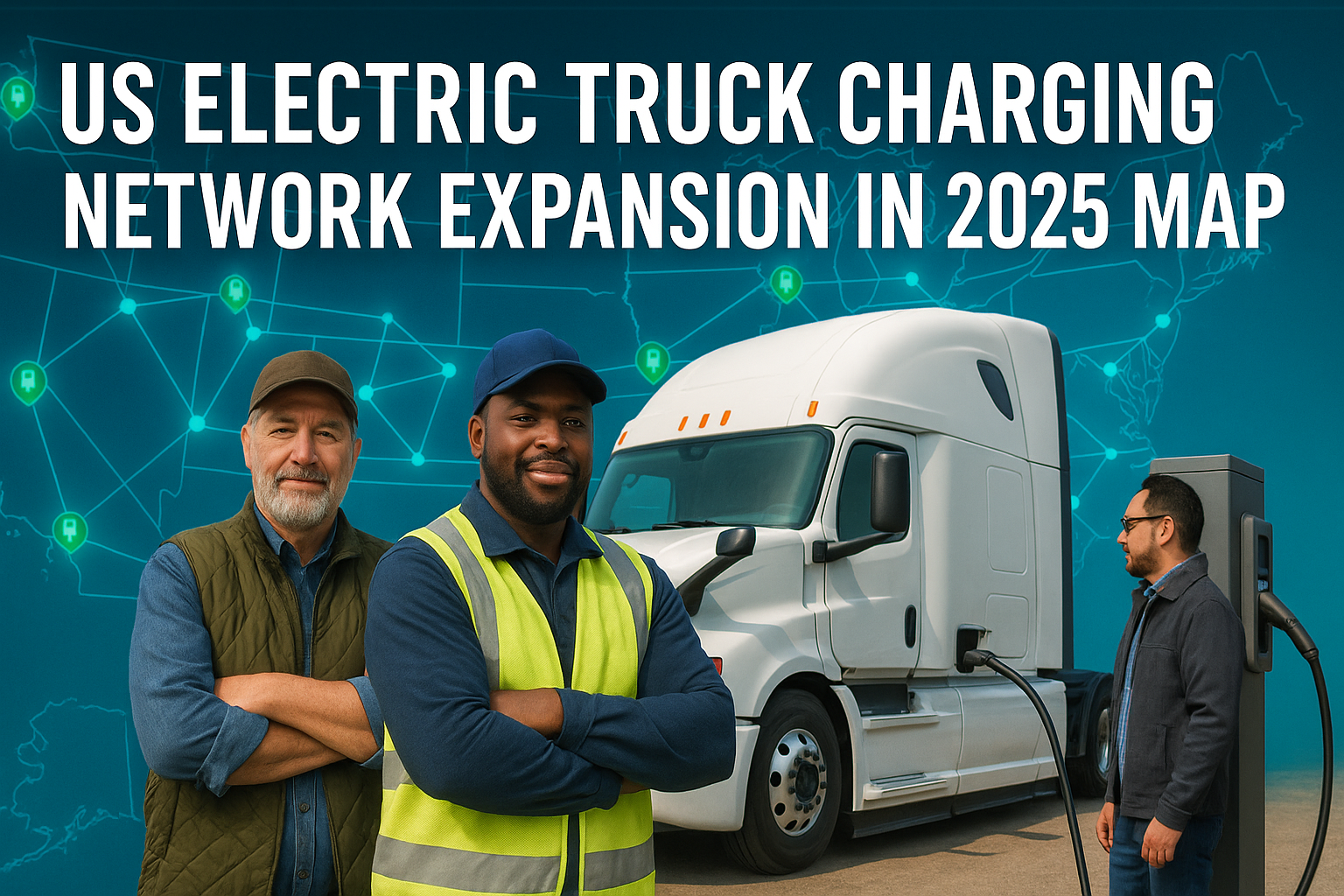
US Electric Truck Charging Network Expansion Map in 2025
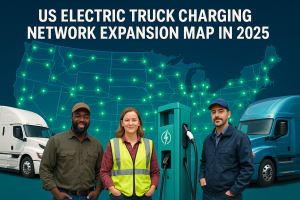
The electric truck charging network in the US will see major improvements in 2025. Key areas of focus include:
- Major Highway Corridors: Charging stations will be installed along the I-5 corridor on the West Coast, the I-80 across the Midwest, and the I-95 on the East Coast. These highways are the busiest for freight traffic and will be a focal point for fast-charging infrastructure.
- Central and Southern Regions: Areas like Texas, Arizona, and the Midwest will see a rise in charging stations to support the trucking industry. These areas are crucial for transporting goods between major cities and industrial centers.
- Truck Stops and Distribution Hubs: Charging stations will be installed at truck stops, distribution hubs, and warehouses to make it easier for drivers to charge during breaks or while loading and unloading cargo.
By 2025, the charging network will be more connected than ever, allowing electric trucks to travel across the country with ease.
Future of Electric Truck Charging in 2025 and Beyond
Looking forward, electric SUV charging networks will get smarter and more resilient. Electricity grid upgrades and renewable energy ties will support even faster chargers. Real-time apps will guide drivers to available stations and let them reserve a slot. Battery-swapping stations or DC fast charging may appear on high-volume routes to cut down on charging time. Partnerships between utilities, truck makers, and governments will fund improvements. By combining better infrastructure and advanced planning, the US will make electric trucking a reliable option for every fleet.
Comparative Table: Key Regions and Highways
| Region | Key Highways | Expansion Focus |
|---|---|---|
| West Coast | I-5 Corridor | Fast-charging stations along key freight routes |
| Midwest | I-80 Corridor | Charging stations at truck stops and distribution hubs |
| East Coast | I-95 Corridor | Fast-charging infrastructure along busy highways |
| Central US | I-35, I-40 | Expansion in key trucking corridors and commercial areas |
| Southern US | I-10, I-20 | Renewable energy-powered charging stations in key states |
This table shows the key regions and highways where the electric truck charging network will expand in 2025. It also highlights the main areas of focus for each region.
Conclusion: The Future of Electric Trucks in the US
The expansion of the electric truck charging network in 2025 is an exciting step toward a more sustainable future for transportation. With the growth of fast-EV charging stations, electric motors, government investments, and private sector participation, electric trucks are set to become a more practical option for long-distance travel.
As we move forward, the US will continue to lead the way in building a more eco-friendly and efficient transportation system. By focusing on expanding the electric truck charging network, we can expect a cleaner, greener future for trucking in the country.