

 Written By
 Football demands a combination of skill, fitness, speed, intelligence, and teamwork. Players need to control the ball under pressure. They also need to make quick decisions and maintain their energy throughout a match. Therefore, a good training routine should develop several abilities at the same time. Effective football training does not focus only on running or shooting. It combines technical drills, physical conditioning, tactical exercises, recovery, and mental preparation. With consistent practice, players can improve their weaknesses and strengthen the skills they already possess.
Start With a Proper Warm-Up
A quality warm-up prepares the body and mind for intense activity. Begin with light jogging for several minutes. Then add dynamic movements such as high knees, leg swings, walking lunges, and controlled changes of direction.
Next, introduce football-specific movements. Use short passes and gentle ball-control exercises. These drills can raise your heart rate while preparing your muscles for more demanding work.
Avoid jumping directly into intense sprints or powerful shots. Give your body enough time to adjust. A gradual warm-up can also help players focus on technique before the main session begins.
Improve Ball Control
Ball control forms the foundation of football. Players who control the ball confidently can make better decisions under pressure. They can also create more options for their teammates. Start with simple touches using both feet. Practice receiving passes from different angles. Then increase the pace and difficulty of each drill.
Players should also practice controlling the ball while moving. Use cones to create small spaces. Dribble through them while keeping the ball close to your feet. Additionally, practice receiving the ball with different parts of the foot. This skill helps players respond to unpredictable passes during matches.
Develop Accurate Passing
Passing allows a team to move the ball efficiently. Good passing requires accuracy, timing, awareness, and proper technique. Begin with short passes. Focus on placing the ball directly in front of your teammate. Use the inside of the foot for controlled passes and keep your body balanced.
Once basic accuracy improves, increase the distance. Add movement and pressure as well. Players should learn to pass while moving rather than standing still. Small-sided games can provide excellent passing practice. They force players to scan the field and make decisions quickly. As a result, players can develop both technical ability and awareness on football training.
Practice Shooting Technique
Scoring requires confidence and composure. Players should practice different types of finishes rather than relying on one technique. Start with simple shots using the inside of the foot. Focus on accuracy before power. Once players develop control, they can practice driven shots, first-time finishes, volleys, and shots from different angles.
Movement also matters. Strikers should practice making runs before receiving the ball. Midfielders and wingers should learn how to arrive in scoring areas at the right time. Furthermore, players should practice finishing under pressure. Add defenders or time limits to create realistic situations. This approach can help players remain calm during important moments.
Build Speed and Agility
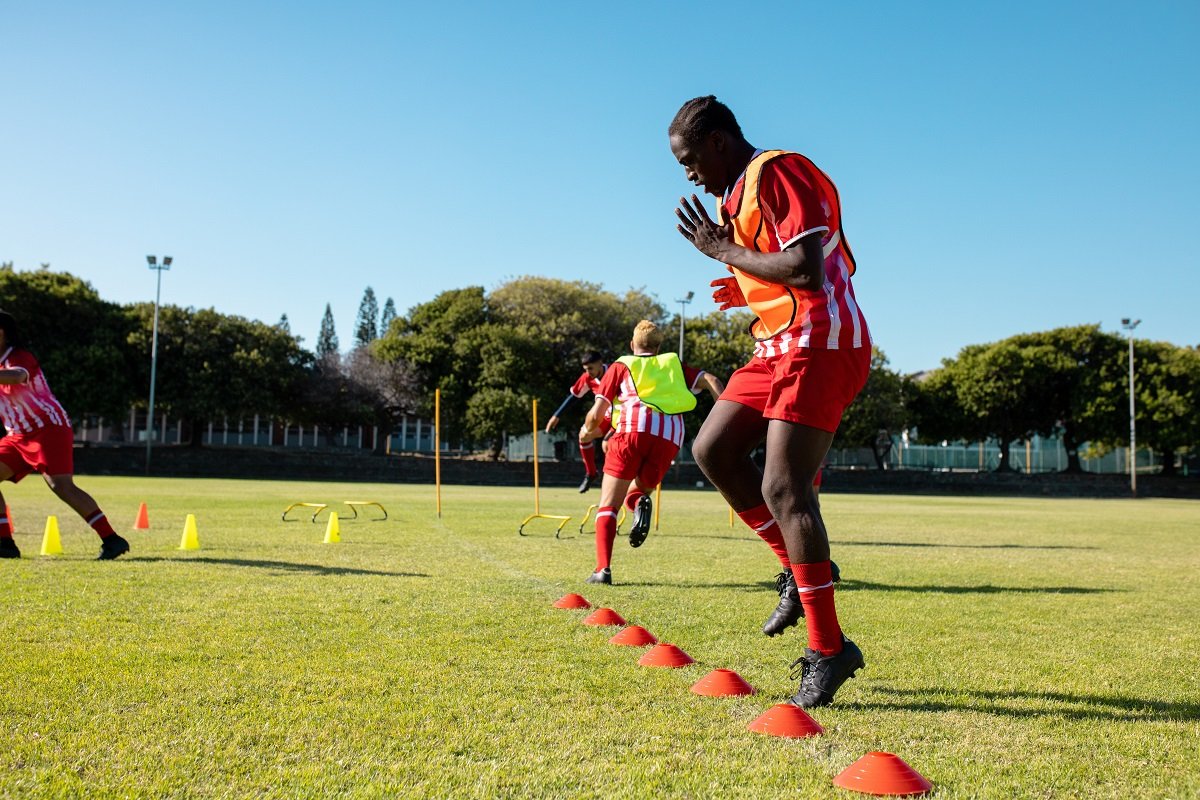
Football involves frequent bursts of acceleration. Players sprint, stop, turn, and change direction throughout a match. Short sprint drills can improve acceleration. Use distances that allow players to maintain high intensity. Give enough rest between repetitions so players can focus on quality.
Agility drills can improve quick changes of direction. Set up cones in different patterns and ask players to react to signals. You can also combine agility work with ball control.
However, avoid excessive sprinting when players feel exhausted. Fatigue can reduce movement quality. It can also make it harder to maintain good technique.
Improve Endurance
Players need enough endurance to perform effectively from the opening whistle to the final minutes. Good conditioning helps them maintain concentration and movement as fatigue increases.
Use a combination of steady exercise and intervals. Easy running can build a basic endurance foundation. Short high-intensity intervals can prepare players for repeated bursts during matches.
Small-sided games also provide useful conditioning. Players constantly move while making technical and tactical decisions. Gradually increase the workload. Avoid adding large amounts of training too quickly. Consistent progress usually produces better results than sudden increases in intensity.
Develop Defensive Skills
Every player has defensive responsibilities. Even attacking players need to understand pressing and positioning. Defenders should practice tackling technique, marking, blocking passing lanes, and maintaining their position. They should also learn when to challenge an opponent and when to delay the attack.
Midfielders need to support the defense by closing spaces. Forwards can contribute by pressing defenders and forcing rushed passes. Communication plays an important role as well. Players should talk to teammates and provide clear instructions during defensive situations.
Add Tactical Training
Technical skills become more useful when players understand how to apply them during matches. Tactical training helps players recognize space, movement, and decision-making opportunities. Coaches can create realistic game situations. Players can practice building attacks from the back, pressing high, defending narrow spaces, or launching counterattacks.
Small-sided games work especially well for tactical development. They give players more touches and more decisions within a limited area. Encourage players to think before receiving the ball. Scanning the field can help them identify passing options early. This simple habit can improve decision-making considerably on football training.
Train With Both Feet
Players often develop a preferred foot. However, strong players can use both feet comfortably. Include exercises that force players to use their weaker foot. Practice passing, receiving, dribbling, and shooting with both sides.
Progress slowly. Accuracy matters more than speed at the beginning. Over time, repeated practice can improve confidence with the weaker foot. This ability gives players more options during matches. They can change direction quickly and play passes without needing an extra touch.
Improve Mental Strength
Physical skills alone cannot guarantee success. Players also need concentration, confidence, discipline, and resilience. Mistakes are part of football. A poor pass or missed shot should not affect the next action. Teach players to reset quickly and focus on the situation in front of them.
Visualization can also help. Players can imagine successful passes, finishes, defensive actions, or difficult match situations. Furthermore, set small training goals. Completing these goals can build confidence and encourage consistent effort.
Prioritize Recovery
Training places stress on the body. Recovery allows players to prepare for the next session. Sleep should remain a priority. Players should also stay hydrated and eat balanced meals that provide enough energy and nutrients.
Light movement can support recovery after demanding sessions. Walking, gentle cycling, and mobility exercises can help players remain active without adding significant stress. Coaches should also monitor workload. Players who show unusual fatigue or persistent discomfort may need additional recovery and professional guidance.
Make Training Consistent
A single hard session cannot transform a player. Improvement comes from regular practice. Create a weekly routine that combines technical work, fitness, tactical exercises, and recovery. Adjust the workload based on the player’s age, experience, position, and competition schedule.
Avoid copying professional routines without considering individual needs. Young or recreational players may require different training demands than elite athletes. The goal should remain simple. Train with purpose and improve gradually.
Final Thoughts
Strong football training combines technical skills, physical fitness, tactical awareness, and mental preparation. Players should practice ball control, passing, shooting, defending, speed, agility, and endurance. They should also learn how to make smart decisions under pressure. Recovery deserves equal attention. Players need enough sleep, hydration, nutrition, and rest to support consistent progress.
Most importantly, players should stay patient. Training produces the best results when athletes practice regularly and focus on quality. Small improvements can build into significant progress over time. With discipline, smart coaching, and purposeful training, players can become more confident, complete, and effective on the field.


